
Picking landing page and marketing software that fits workflow, technical skill, and campaign goals feels confusing because top platforms often look similar at first glance. Many platforms or builders offer vague feature lists, have unclear pricing, or restrict integrations, which leads to wasted pilot time and trial errors. This article compares cost, AI features, analytics, integrations, and use cases across six leading competitors so you can select a Strawpage alternative that fits your real campaign needs.
Table of Contents
Toolsplorer
At a Glance
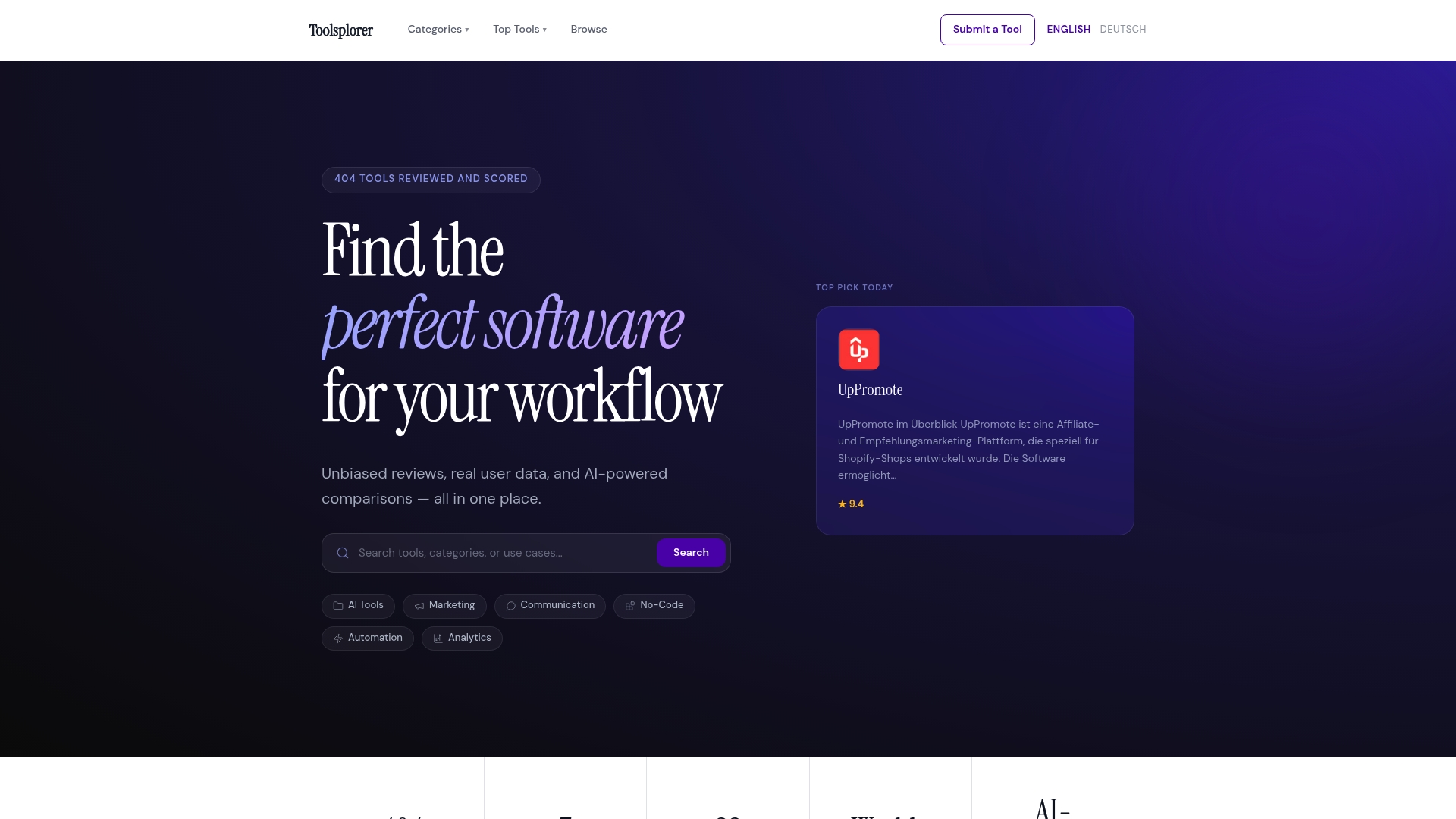
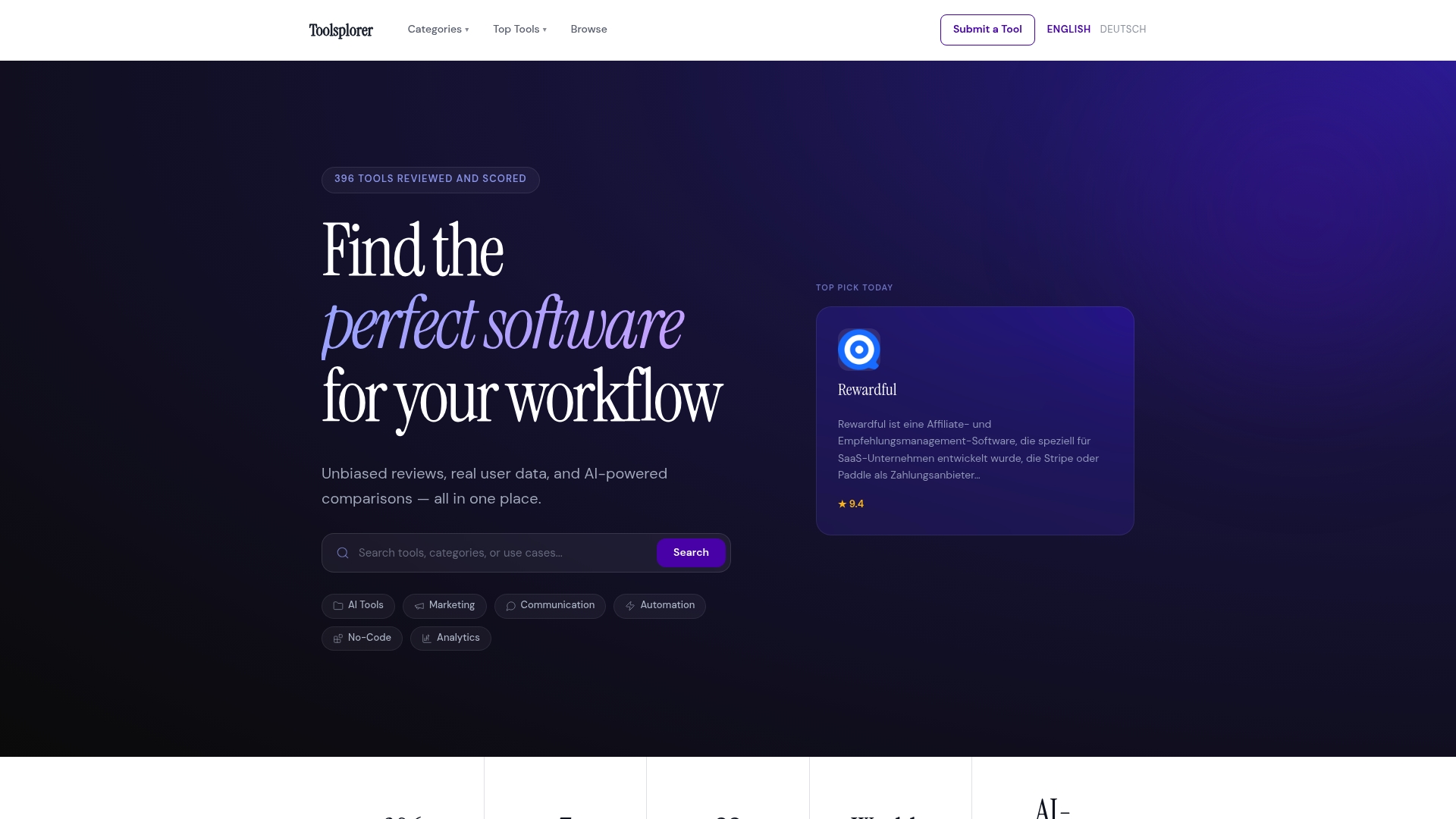
The vendor advertises an AI powered comparison and scoring system that aggregates reviews and real user data. Toolsplorer collects impartial reviews, aggregated rankings, and user submissions across categories such as marketing, finance, technology, and education. Small teams and larger organizations use the site to narrow choices before testing vendor trials.
Core Features
Toolsplorer aggregates reviews from multiple sources and surfaces those inputs in aggregated rankings and comparison pages. The site pairs those rankings with a user submission system so readers can add new tools or update an entry. Regular updates keep the database current while covering categories from no code to analytics.
Key Differentiator
The scoring engine blends multiple review sources with aggregated user feedback to produce a single comparative rank for each tool. That scoring system lets readers compare peer sentiment and editorial signals side by side. The combination makes shortlist creation faster than manual review of separate review sites.
Pros
Toolsplorer centralizes disparate review sources into one place, reducing the time you spend opening multiple review sites. The scoring system converts mixed signals into a single rank, which helps justify choices to stakeholders. Wide category coverage and the user submission workflow expand the catalog and keep entries updated.
Cons
- Limited detailed feature information for each listed tool without visiting the individual vendor website
Who It’s For
Small business owners and digital marketers who need a quick way to compare software across categories will find this comparison site useful. Product managers and procurement teams that must present ranked options to stakeholders can use the aggregated scores to shorten their shortlists. Organizations that want community contributed entries will appreciate the submission feature.
Unique Value Proposition
Aggregated rankings let you reduce long vendor lists into a few ranked finalists before committing to trials. That reduces evaluation time and helps you focus pilot budgets on the most promising options. For teams that must defend purchases, the combined score provides a single reference point across review sources.
Real World Use Case
A product manager evaluating natural language processing tools uses Toolsplorer to fetch scores and consolidated reviews. They compare the top ranked options, shortlist two for proof of concept, and document the ranking rationale for stakeholders. The workflow cuts a week of initial research into a single afternoon of focused evaluation.
Website: https://toolsplorer.com
SaaSworthy
At a Glance
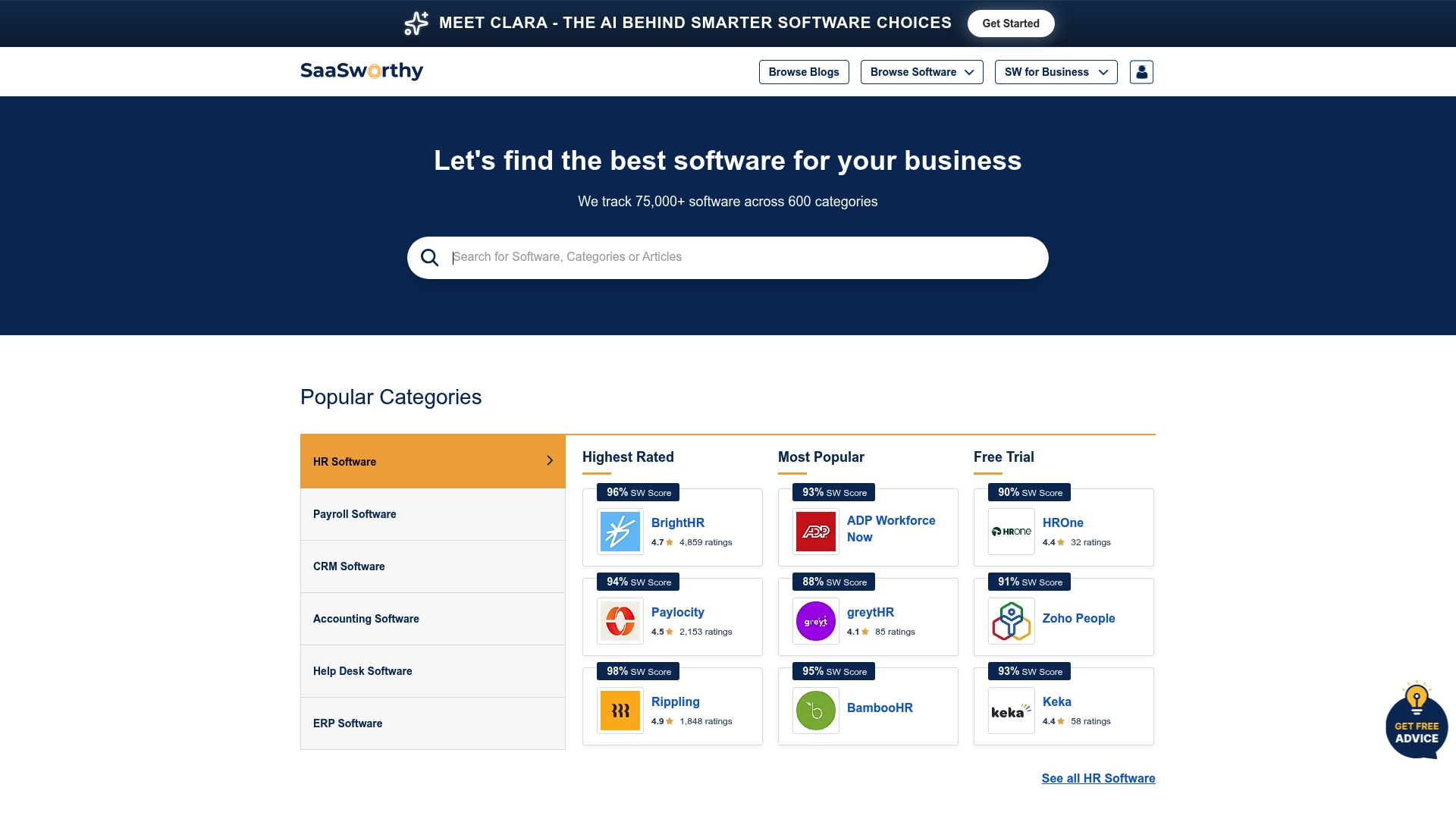
SaaSworthy reports it tracks over 75,000 software across more than 600 categories. That scale powers curated lists, awards, and community recommendations. The site pairs detailed product pages with a vendor-facing listing option.
Core Features
SaaSworthy publishes detailed product information and community and expert reviews to help people compare options. The site uses an SW Score ranking system and issues awards to highlight notable products. Vendors can request product listings and reach buyers through curated collections and editorial picks.
Key Differentiator
The defining angle is the emphasis on a single ranked metric and community commentary to speed comparison work. The SW Score aggregates signals across reviews and listings to give buyers a quick anchor. That metric is useful when you need a short list to vet further.
Pros
SaaSworthy helps buyers shorten research time by combining reviews, curated lists, and the SW Score into one view. Its editorial lists and awards highlight candidates that reviewers and contributors have discussed. Vendors gain free listing and promotional paths that raise visibility without a paid sales push.
Cons
- Limited technical detail: product pages sometimes lack granular feature matrices and implementation notes.
- No explicit pricing data is shown for many listings, so cost comparisons require follow up with vendors.
- Community reviews vary in depth and tone, which makes reliability uneven across categories.
When It May Not Fit
If you need firm pricing or subscription tiers before vendor outreach, this site will not provide that information. Procurement teams that require standardized cost data will need an additional source. Organizations focused on compliance or certified evaluations should seek a specialist resource.
Who It’s For
Business decision-makers and tech buyers who want a fast way to compare candidate SaaS tools will get value here. SaaS vendors seeking exposure and basic SEO-driven listings will find the vendor paths practical. Small teams that prefer curated shortlists over deep technical audits will benefit most.
Real World Use Case
A small business owner compares HR and accounting options by reading reviews, scanning the SW Score, and opening curated lists for payroll and bookkeeping. They shortlist two vendors, request demos, and finalize a choice after trial runs. The process cuts initial vendor screening to a few hours rather than days.
Website: https://saasworthy.com
Landingi
At a Glance
Biedronka used Landingi to launch real-time campaign pages and manage multiple campaigns simultaneously. That case shows Landingi can handle high-volume marketing operations and rapid page deployment. Pricing ranges from $24/month billed annually to $1,199/month billed annually, and a 14-day free trial is available.
Core Features
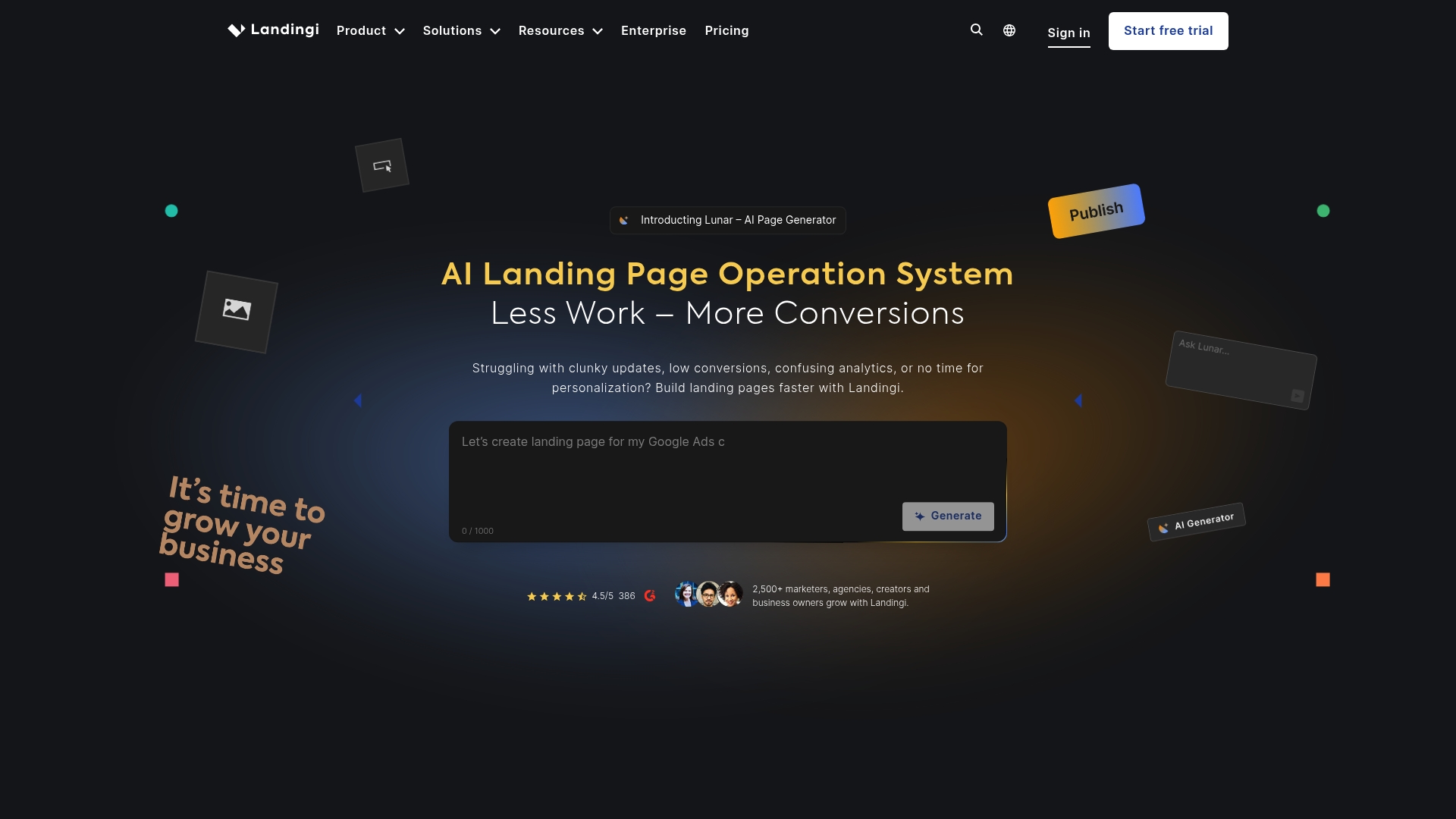
Landingi pairs a visual drag-and-drop page builder with a library of more than 400 templates and a forms builder for lead capture. The platform includes Lunar for AI-generated landing pages and Solis for AI-based performance analysis, plus A/B and multivariate testing to refine conversion paths. Programmatic page creation, Smart Sections for synchronized updates, and team workspaces support large campaigns and agency workflows.
Key Differentiator
Landingi centers its workflow on automated scale for enterprise campaigns while keeping the creator experience approachable. The combination of programmatic page generation and AI page templates speeds bulk production of campaign variants. This focus on scale plus editable templates separates it from single-page builders aimed only at small teams.
Pros
The visual builder and template library make initial page creation fast for marketers who do not code. Programmatic generation and Smart Sections let you update hundreds of pages from a single change, which saves time on recurring promotions. Security features such as SSL, audit logs, GDPR controls, and two-factor authentication match enterprise needs and help with compliance. Extensive connectivity to CRMs, email platforms, analytics, and e-commerce systems keeps form data flowing into existing stacks.
Cons
- The platform can feel complex for new users who have not worked with marketing automation before.
- Advanced customization sometimes requires technical expertise or developer support.
- Pricing at the enterprise tier may be high for startups or very small teams.
- Initial setup and integration work can consume significant time for large deployments.
When It May Not Fit
If you run a single-landing-page campaign or have only a few monthly visitors, Landingi may offer more features than you need. Small startups with tight budgets might find lower-cost builders better for simple lead capture. Teams without technical resources should expect a learning curve when enabling programmatic pages and enterprise integrations.
Notable Integrations
Landingi connects to broad integration categories rather than only a few native apps. Key connection points include CRM, email marketing, analytics and tracking, e-commerce platforms, and callback and chat services. These integrations support passing leads and event data into existing marketing and sales systems.
Who It’s For
Large organizations, marketing agencies, and enterprise teams running many concurrent campaigns will get the most from Landingi. Teams that need secure, auditable access controls and domain whitelisting will benefit from its admin features. Marketing operations owners who plan to generate pages programmatically and measure performance at scale will find the platform aligned with their needs.
Real World Use Case
A major retailer used Landingi to spin up dozens of campaign pages in real time and keep content synchronized across variants. The retailer paired programmatic generation with A/B testing to iterate offers quickly during peak promotional periods. That approach reduced manual edits and kept tracking consistent across campaign funnels.
Pricing
Plans start at $24/month billed annually for the Build plan and scale up to $1,199/month billed annually for Enterprise. A 14-day free trial lets teams test templates, AI generation, and integration workflows before committing.
Website: https://landingi.com
Zoho LandingPage
At a Glance
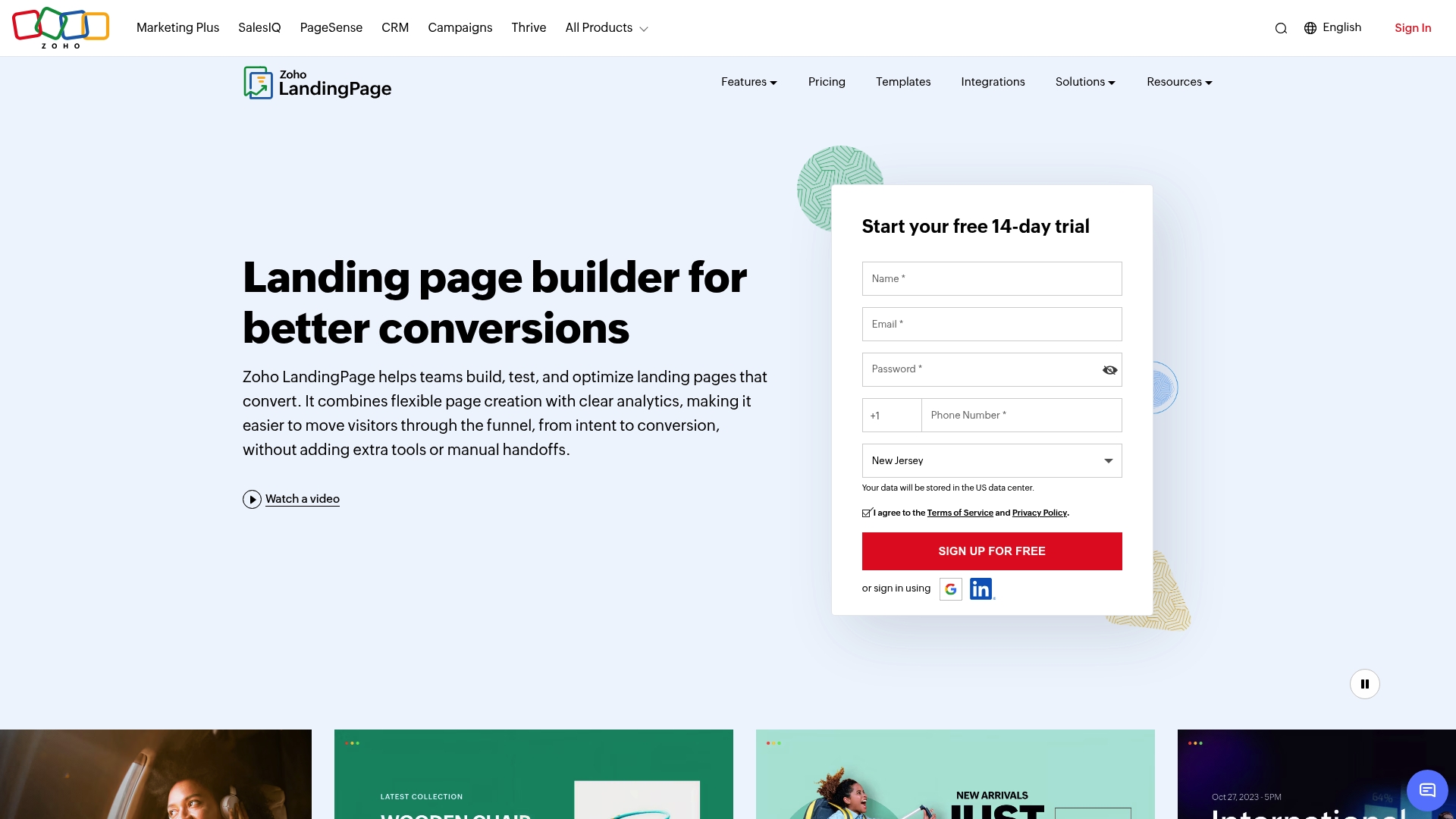
Built-in analytics and heatmaps sit alongside AI-powered content suggestions and dynamic popups. This combination lets teams test page variants and monitor visitor behavior without adding separate tools. The platform targets marketers who want quick, measurable landing pages with no coding required.
Core Features
Zoho LandingPage offers a drag and drop landing page builder with responsive templates and A/B testing. Built-in analytics and heatmaps connect directly to personalization controls and dynamic popups. The product also supports ecommerce checkout pages, secure SSL, and native links to Zoho apps and common marketing platforms.
Key Differentiator
The clearest advantage is AI-powered content suggestions combined with deep integrations across the Zoho ecosystem and third-party marketing tools. That pairing shortens the content creation loop and reduces manual handoffs to other teams. Marketers can generate copy suggestions and then push leads into CRM or email platforms without extra connectors.
Pros
The interface favors speed. The drag and drop editor and a wide template library let small teams launch pages quickly. Built-in analytics and heatmaps keep optimization work inside the same tool instead of scattering data across systems. Strong links to Zoho CRM and common platforms reduce friction when moving leads into automation or sales workflows.
Cons
- Pricing details are not publicly detailed, which makes budgeting for large volumes unclear.
- Some third-party reviews report limits on advanced visual customization for highly styled pages.
- The product may not expose full custom code options that specialist developers expect.
When It May Not Fit
If you need detailed, transparent enterprise pricing, this product may not be the right fit. Development teams requiring full custom code access will likely find the customization options limiting. Large organizations that need bespoke landing experiences or complex integrations beyond supported connectors should evaluate alternatives.
Notable Integrations
Zoho Campaigns, Mailchimp, HubSpot, Salesforce, Zoho CRM, and LinkedIn. These connections support email workflows, CRM lead capture, and paid social lead passing without manual CSV exports.
Who It’s For
Marketing teams at small and mid-sized businesses that need fast, measurable landing pages. Agencies that deploy multiple client campaigns and want CRM and email tie-ins will get the most value. Teams that prefer a visual editor and built-in optimization tools rather than a developer-heavy build process will find this product practical.
Real World Use Case
A digital marketing agency uses Zoho LandingPage to spin up campaign pages for several clients in a single afternoon. The agency applies AI copy suggestions, runs A/B tests, and sends leads to Zoho CRM for sales follow up. The team then iterates page variants using heatmap insights to raise conversion rates.
Website: https://zoho.com/landingpage
PageFly
At a Glance
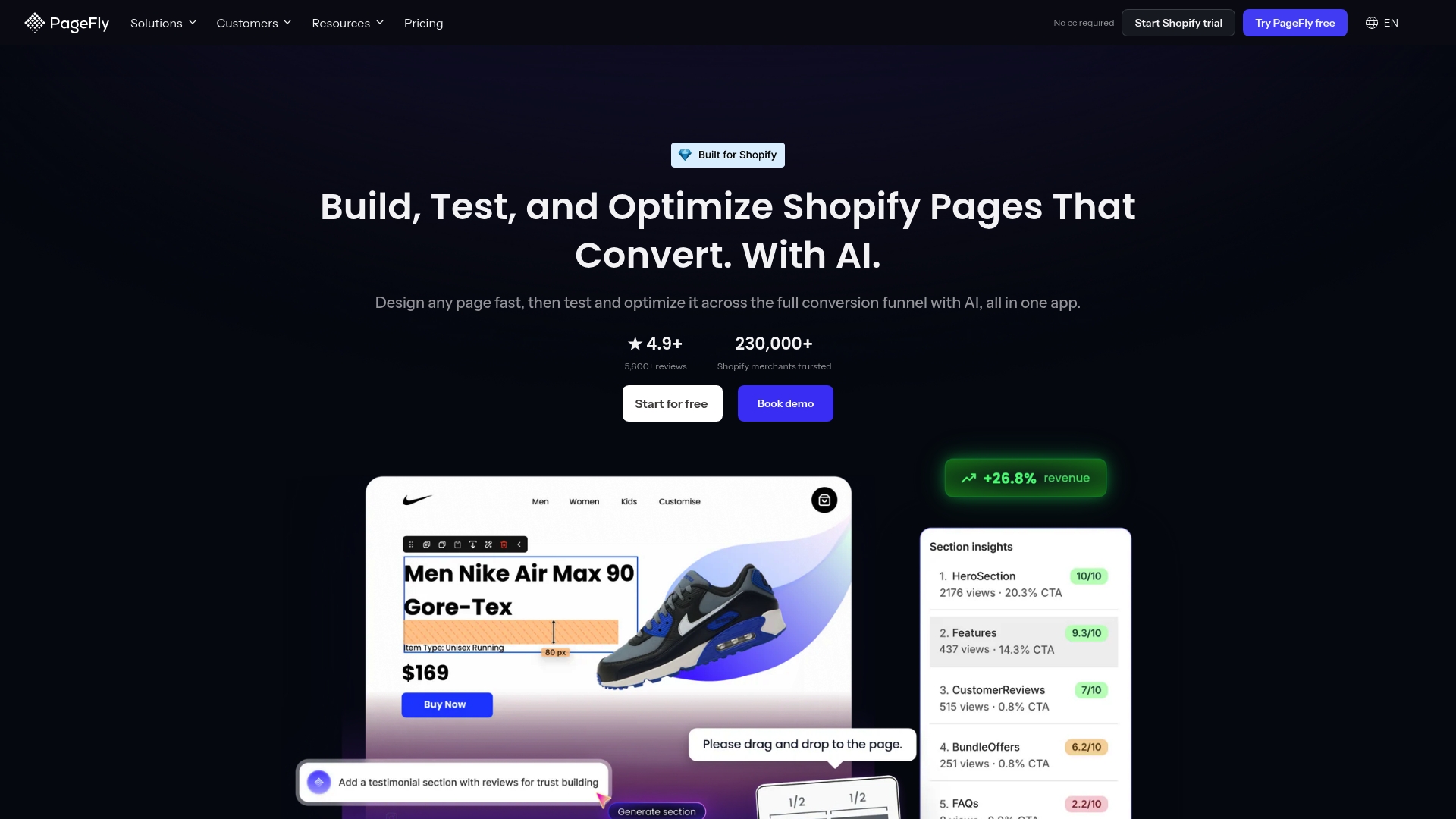
PageFly reports it is trusted by over 230,000 Shopify merchants worldwide. The product advertises AI powered tools inside a visual page builder that aim to speed design and testing. Its plans target merchants from solo stores to Shopify Plus teams.
Core Features
PageFly combines a visual drag and drop editor with over 320 responsive templates for landing pages, product pages, and homepages. The product includes AI powered Smart Page builder, AI Page Checkup, and a Translator to help with copy and localization. Built in analytics, heatmaps, A/B testing, and funnel analysis tools let you measure and refine pages without jumping between tools.
Key Differentiator
PageFly puts AI powered page creation and optimization tools directly inside a no code visual editor. That mix lets you generate layouts, run page checks, and iterate A/B tests inside the same interface. Teams that want AI assist without leaving the editor will find that workflow notable.
Pros
The visual editor is easy to learn and keeps nondevelopers moving quickly through page builds. The template library is large and oriented around conversion layouts, which reduces design trial and error. AI tools speed initial drafts and offer checks that can catch SEO and localization issues. Pages render responsively and generally load fast when elements are kept lean. Support resources and access to dedicated experts make troubleshooting quicker.
Cons
- Limited free plan: The free tier restricts you to one page and 10 AI credits, which limits experimentation.
- Advanced features gated: Core analytics and A/B testing require higher tier subscriptions, so analytics needs raise costs.
- Performance variability: Large, complex pages can show differing load times depending on implementation and theme.
When It May Not Fit
If you need many varied pages on a free budget, the one page free tier will feel tight. Stores building extremely large or script heavy pages may face performance trade offs. Teams that require advanced analytics and AI at the lowest price will likely need a paid plan.
Who It’s For
PageFly fits Shopify merchants and ecommerce marketers who want no code control over page design. It suits small businesses that need quick landing pages and mid market teams iterating product pages. Enterprise merchants on Shopify Plus who want multiple store support will also find relevant features.
Real World Use Case
A Shopify store used PageFly templates and AI tools to tighten product page layouts and personalize copy. The team ran A/B tests with the built in tools to refine calls to action and tracked heatmaps to remove distracting elements. The result was clearer product pages and higher engagement.
Pricing
A free plan is available. Paid plans start at $24/month for the Builder plan and go up to $199/month for the Power plan. Enterprise pricing is available for larger teams and multi store needs.
Website: https://pagefly.io
Swipe Pages
At a Glance
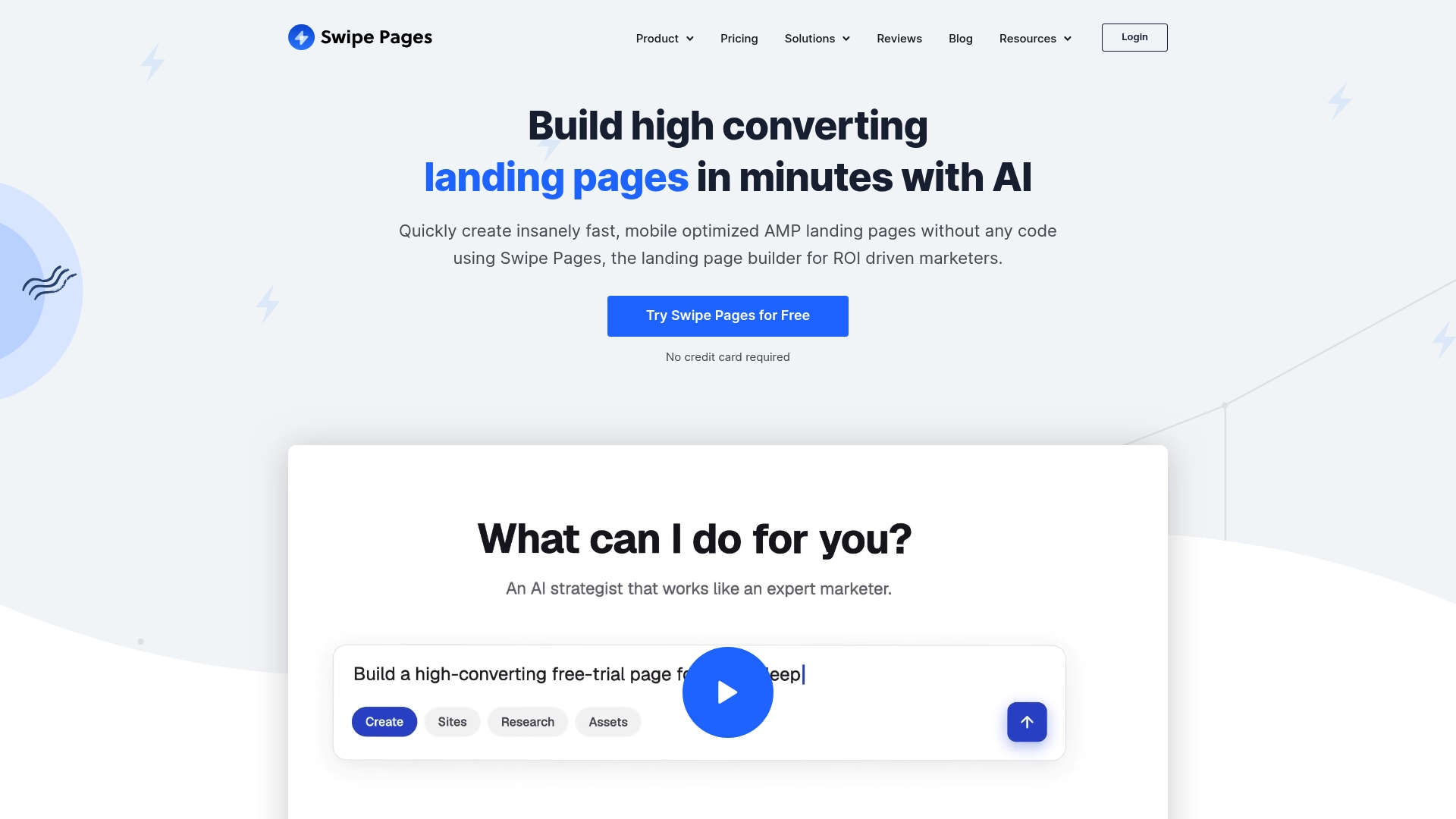
Swipe Pages uses AMP to deliver mobile pages that load very quickly. The platform pairs AMP with AI assisted page creation to speed up design work. It targets marketers, entrepreneurs, and agencies who run mobile ad campaigns.
Core Features
The product includes a Drag & Drop Landing Page Builder and device specific responsive settings so you can tune layouts for phone and desktop. It ships with over 40 templates and 80 plus blocks you can reuse across campaigns. Hosting, analytics, SSL, and conversion optimization tools sit alongside an AI Landing Page Builder to help you generate draft pages faster.
Key Differentiator
The clearest advantage is native AMP support, which the vendor says produces much faster mobile load times and earns Google recommendations for speed. That focus on mobile performance separates it from many builders that optimize desktop first. For ad driven campaigns, the speed emphasis can cut mobile friction for visitors.
Pros
High performance on mobile stands out, because AMP pages load quickly and reduce bounce risk on slow networks. The visual editor makes building pages possible without coding, while the template library covers common niches and campaign types. Integrations via Zapier and direct connectors let you push leads into email and CRM tools, and built in hosting with CDN and SSL simplifies publishing.
Cons
- Some new users report a learning curve when facing the full feature set, especially advanced block customization.
- Pricing can be higher than basic landing page builders, which may pressure small shops on tight budgets.
- Deep customization may require comfort with design and basic development concepts to get exactly the look you want.
When It May Not Fit
Very small businesses or solo operators with minimal budgets may find the entry cost heavy for occasional landing pages. Teams seeking a bare bones builder for one off pages will likely prefer cheaper basic tools. If you need extreme template flexibility without learning design settings, this product may feel restrictive.
Notable Integrations
Swipe Pages integrates with common marketing systems so leads flow out of pages quickly. Key integrations include:
- Zapier
- Mailchimp
- HubSpot
- Constant Contact
- Zoho Campaigns
- Converkit
Who It’s For
This tool fits marketers, agencies, and entrepreneurs who prioritize mobile performance and conversion. Use it if you run mobile ad campaigns or need consistent, repeatable landing pages across clients. Teams that rely on email and CRM workflows will benefit from its built in connectors.
Real World Use Case
A digital marketing agency builds AMP landing pages for mobile ad traffic and publishes them the same day. Pages load faster on phones, which improves engagement during campaigns. The agency then captures leads into HubSpot or Mailchimp for follow up.
Pricing
Plans start at $29/month for the Startup plan, with higher tiers that add agency features and more pages. Annual billing discounts are available on selected plans.
Website: https://swipepages.com
Comparison of alternatives
For professionals evaluating alternatives to create, optimize, or compare software solutions, choosing the appropriate platform can vastly streamline decision-making. Each reviewed solution offers compelling features and unique value propositions, addressing diverse business needs in different use case contexts. In this analysis, we explore the strengths and limitations of the highlighted platforms, ensuring an informed choice among strong contenders.
Aggregated rankings and user-driven content
Toolsplorer uniquely aggregates reviews from multiple sources alongside user-submitted data, creating a and evolving ranking structure. This structure aids users in quickly pinpointing the solutions for their specific requirements. By integrating varied inputs into unified comparative rankings, it surpasses individual review platforms in its ability to deliver well-rounded decision insights. While its detailed per-feature information might be limited, the platform compensates by acting as an exhaustive comparison tool for narrowing down vendors efficiently.
Specialized platforms for page and campaign management
Individual product focuses shine through in niche use cases. For instance, Swipe Pages excels in delivering rapid-loading AMP-optimized landing pages for mobile devices, which is critical for ad-driven campaigns targeting on-the-go audiences. Similarly, Landingi enables scalable and programmatic creation of dedicated campaign pages, ideal for handling large-scale or simultaneous marketing campaigns. These strengths align with particular business activities, creating a suite of specialized tools tailored for in-depth fulfillment of specific needs.
Best fit
- Organizations aiming for efficient and vendor comparison across multiple categories can leverage the aggregated scores and rankings provided by Toolsplorer.
- Decision-makers requiring in-depth product data for software tools beyond rankings may find SaaSworthy more aligned with their research needs.
- Agencies and businesses conducting high-volume marketing campaigns should consider Landingi for its programmatic page creation and enterprise-grade compliance features.
- Marketing teams focusing on mobile performance and rapid rollout of ad campaigns will value Swipe Pages for its native AMP page capabilities and visual editing options.
Our pick
Toolsplorer emerges as the most versatile option for software comparisons. Its unique capability of blending aggregated external reviews with community-contributed insights provides a streamlined and efficient framework for initial evaluations. This platform is ideal for teams seeking to simplify and expedite the initial vendor selection process, even if additional detailed insights require auxiliary resources.
Here is a comparison to assist in evaluating different platforms for software comparison insights and utility.
| Product | Core Feature | Key Differentiator | Best For | Notable Limitation |
|---|---|---|---|---|
| Toolsplorer | Aggregated reviews and rankings | User submission system and updated scoring | Small business owners and product managers | Limited detailed feature information for listed tools |
| SaaSworthy | Extensive product information and reviews | SW Score and curated lists | Business decision-makers and SaaS vendors | Lacks transparent pricing and standardized cost data |
| Landingi | Visual drag-and-drop landing page builder | Programmatic generation and dynamic updates | Marketing agencies and large organizations | Advanced features may require technical expertise |
| Zoho LandingPage | AI-powered content suggestions | Strong Zoho ecosystem integration | Small to mid-sized marketing teams | Pricing details lacking and limited advanced customization options |
| PageFly | Visual page builder for landing and product pages | AI tools combined with no code design | Shopify merchants and e-commerce marketers | Free plan and basic tiers restrict advanced features |
How Can You Find Reliable Strawpage Alternatives Without Wasting Time?
Choosing the right software for your marketing or business needs can feel overwhelming with so many options available. You need clear, data-backed comparisons and unbiased reviews that help you cut through the noise. Toolsplorer offers an AI-powered scoring system that combines user feedback and expert reviews to rank software alternatives like strawpage efficiently.
Whether you are a small business owner, a product manager, or part of a procurement team, Toolsplorer helps you create concise shortlists in less time. See detailed, aggregated reviews across categories relevant to your work and make confident decisions with less guesswork.
Take the first step toward smarter selection by visiting Toolsplorer. Start comparing top strawpage alternatives now and quickly identify which tools fit your needs best.
FAQ
What is Toolsplorer’s primary strength in software comparison?
Toolsplorer excels by aggregating real user data and reviews to create a consolidated ranking system for various software alternatives. This scoring engine allows users to compare tools based on peer sentiment and editorial inputs side by side, making it simpler to create shortlists before testing vendor trials.
How does Toolsplorer compare to SaaSworthy regarding scoring systems?
SaaSworthy employs an SW Score ranking system to aggregate reviews and highlight notable products effectively. Toolsplorer, however, stands out with its unique scoring engine that blends multiple review sources with user feedback, helping users get a more comprehensive comparison tailored to their needs.
Can Toolsplorer help digital marketers find the right software quickly?
Toolsplorer allows digital marketers to quickly compare software across categories through its user submission system and regular updates. This means you can efficiently narrow down your choices and select the most suitable software before committing to trials.
What is a potential limitation when using Toolsplorer?
While Toolsplorer provides aggregated rankings and reviews, it may have limited detailed feature information for each listed tool unless you visit the individual vendor’s website. Users should keep this in mind when looking for comprehensive feature insights.
Which organizations benefit the most from Toolsplorer’s features?
Small business owners and product managers will benefit greatly from Toolsplorer’s ability to provide ranked options, helping them present justified software choices to stakeholders. The aggregated scoring and community contributions enhance decision-making efficiency in these settings.