
Comparing ow.ly and bitly using review sites is difficult when rankings, review criteria, or source credibility change from platform to platform. Many software comparison sites hide rankings behind paywalls, require unnecessary registrations, or do not share how they score tools. Product managers and marketing teams can use this guide to pick a trusted site that matches their process for vendor shortlisting.
Table of Contents
Toolsplorer
At a Glance
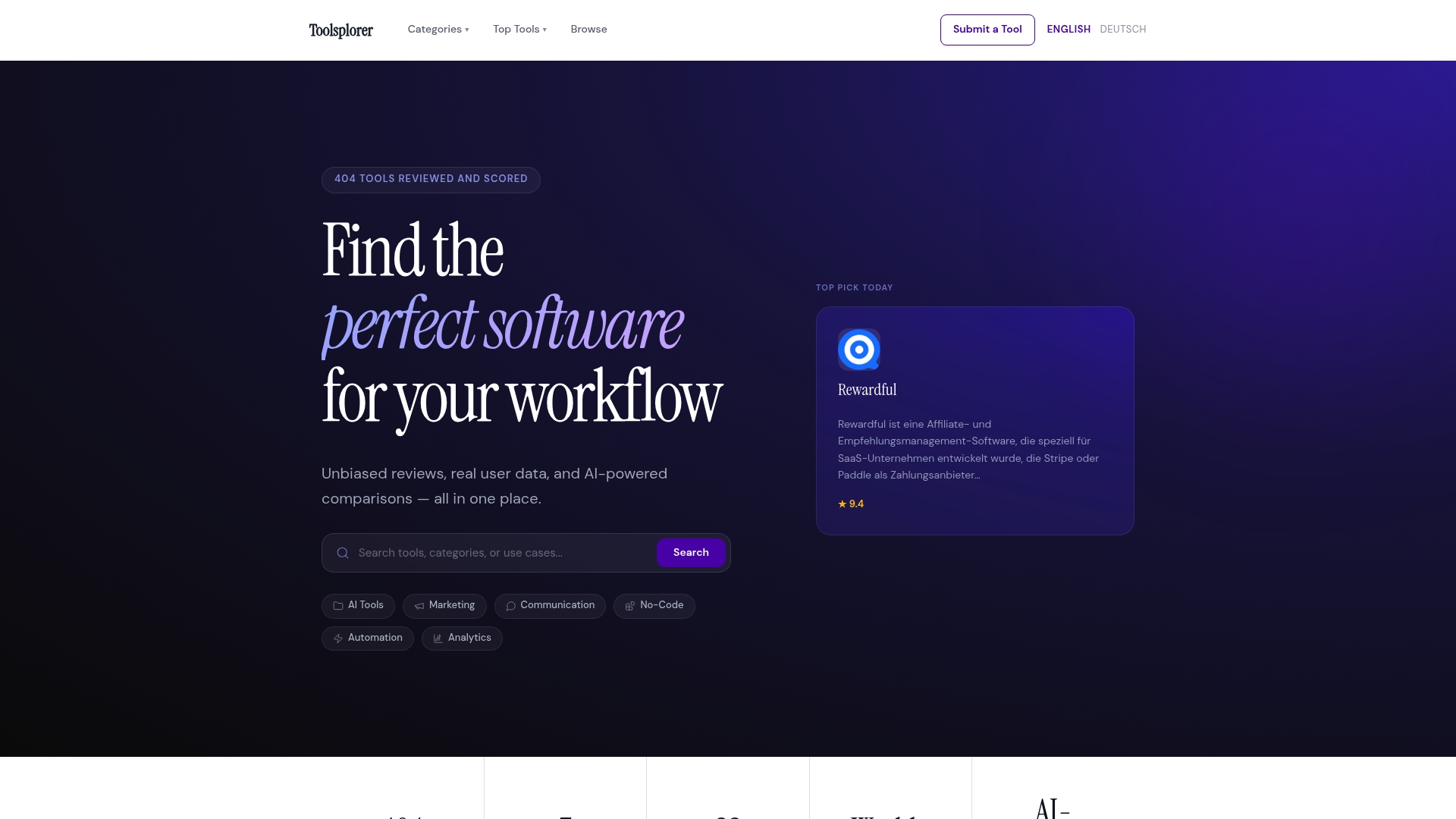
Aggregates unbiased reviews from multiple independent sources using AI powered scoring to produce ranked tool lists. The site publishes weekly data updates and surfaces real user data alongside rankings. Vendors can submit tools for review, and Toolsplorer highlights top rated and recently added entries for quick discovery.
Core Features
Toolsplorer combines aggregated review data with AI powered comparison charts, and it refreshes rankings every week to reflect new feedback. Coverage spans AI tools, marketing, communication, no code, automation, and analytics, with curated rankings across those categories. Each listing links to rating sources, and the site supports vendor submissions and side by side comparisons.
Key Differentiator
Toolsplorer centers its ranking on AI powered scoring that consolidates multiple independent review sources into a single ranked output. That scoring helps reveal where reviewer opinions converge or diverge, reducing manual cross checking for your team. Publishing the underlying rating sources with each rank adds transparency for procurement and vendor selection.
Pros
Aggregating independent review sources produces more balanced ratings than single site lists, and visible rating sources let you verify opinions quickly. Curated rankings and side by side comparison charts shorten the shortlist creation process for product managers and marketers. Regular weekly updates keep lists current for fast moving tool categories while vendor submissions bring new entries into view.
Cons
- Relies on third party review sources, which may vary in accuracy.
Who It’s For
Product managers and marketing teams who need a ranked shortlist and linked review sources for vendor evaluation will benefit most. Small businesses and teams without dedicated procurement staff can use the aggregated rankings to reduce research time. Vendors looking for exposure can submit tools and track ranking movement over time.
Unique Value Proposition
AI powered scoring produces a ranked shortlist that reduces the manual work of collating reviews across sites. You get a traceable ranking with weekly updates and visible rating sources, so decisions focus on trials and contracts. Vendors gain a place to list new releases without heavy outreach to every review site.
Real World Use Case
A marketing team compares AI content tools by filtering Toolsplorer’s curated rankings and inspecting rating sources to shortlist three vendors for trials. Weekly updates flag new entrants and surface recent reviews that change candidate order. The team uses the linked sources to justify vendor selection to stakeholders.
Website: https://toolsplorer.com
Softwarefinder
At a Glance
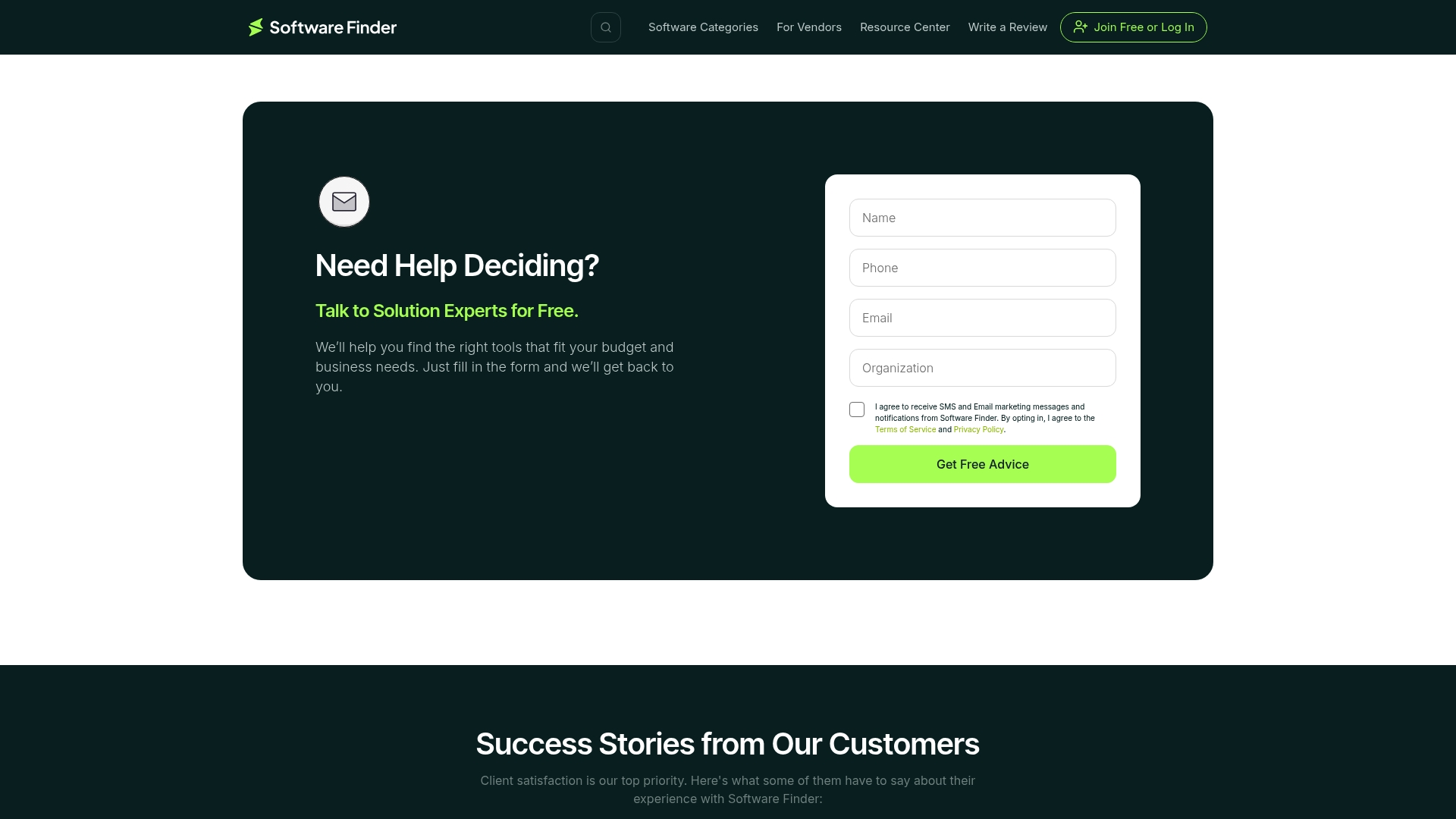
Softwarefinder offers a free service for buyers while vendors report high lead costs and aggressive outreach. Independent reviews show mixed experiences with vendor communication and pay per lead transparency. That split between free access and vendor complaints defines how buyers and suppliers use the site.
Core Features
The site combines unbiased reviews from real customers with expert recommendation articles and a resource center. It covers enterprise categories such as ERP, HR, EMR, and LMS and groups comparisons by use case. Vendors can claim profiles and participate in lead programs, which creates visibility and fuels the marketplace.
Key Differentiator
The platform pairs unbiased reviews with expert advice and active vendor profile management. That mix makes it a marketplace where vendor outreach and lead generation sit alongside buyer research. Compared with Toolsplorer’s AI driven scoring and aggregated review signals, this approach favors direct vendor engagement over algorithmic ranking.
Pros
Free access to curated reviews and expert guidance helps procurement teams reduce initial research time. The resource center includes industry reports and comparison tools that support side by side evaluation. Authentic user feedback across ERP, HR, EMR, and LMS categories supplies operational detail marketing pages omit. Vendor profile claiming and lead programs increase visibility and offer a direct sales path for suppliers.
Cons
- Some vendors report aggressive outreach and high lead costs, which creates vendor dissatisfaction.
- Leads are often shared among multiple vendors, reducing exclusivity and lead value.
- Communication from the platform can be unprofessional or spammy according to third party accounts.
When It May Not Fit
If your priority is exclusive transparent leads, this platform may be a poor match. Buyers who rely on algorithmic rankings and aggregated AI driven scores will prefer sites with scoring emphasis. Vendors unwilling to tolerate shared leads or aggressive outreach should avoid paid lead programs here.
Who It’s For
Procurement teams wanting direct user feedback and curated expert analysis gain practical research shortcuts. Small and mid sized organizations with limited buyer research resources benefit from free tools and reports. Vendors ready to invest in lead programs and profile management will find visibility opportunities, with trade offs.
Real World Use Case
A mid sized company used Softwarefinder to compare HR management tools by reading multiple user reviews and expert notes. The procurement team prioritized support and onboarding issues raised in reviews rather than vendor marketing claims. Vendors claimed profiles and joined the lead program, which generated inbound contacts shared among several suppliers.
Website: https://softwarefinder.com
SaasTrac
At a Glance
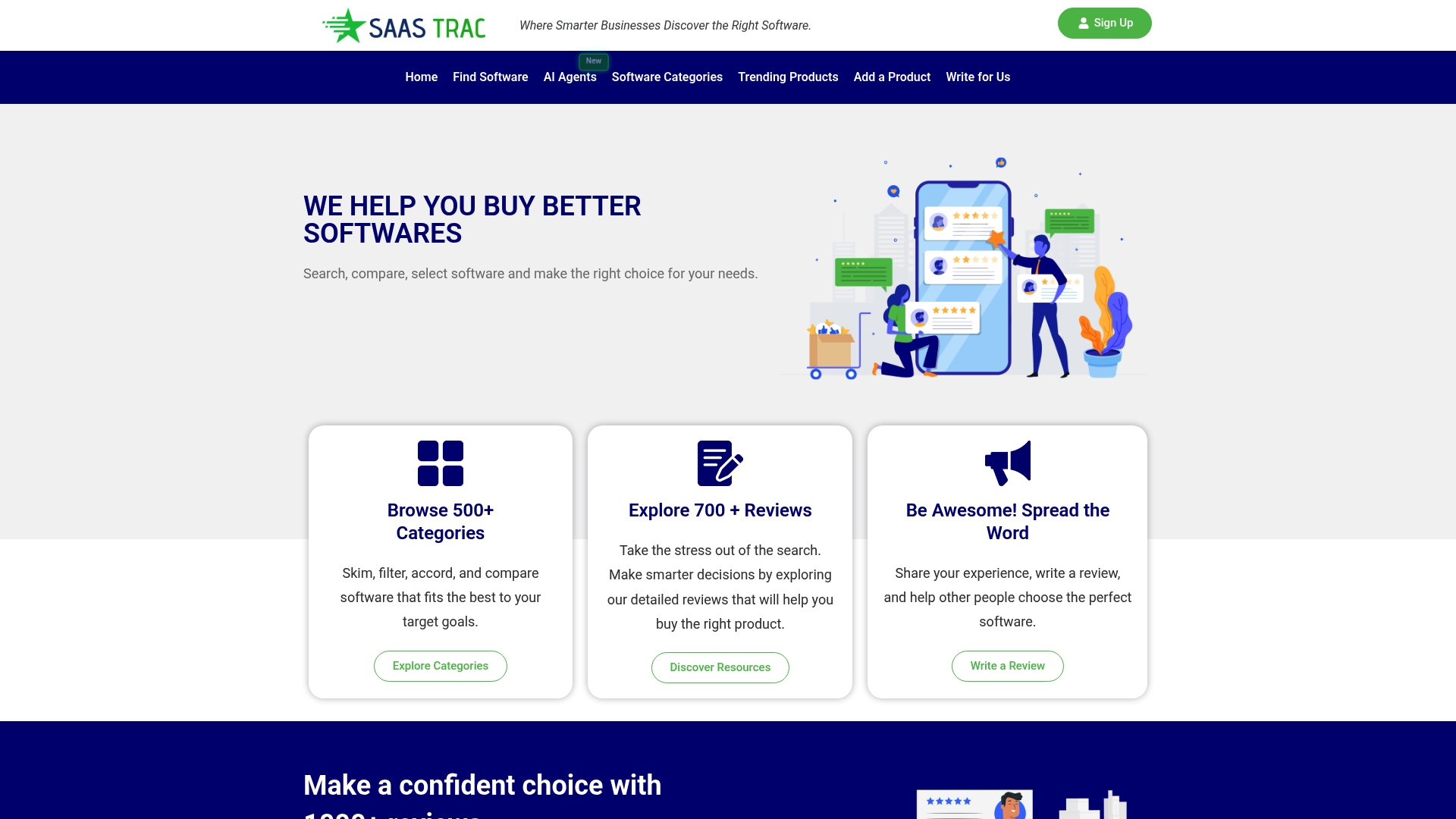
SaasTrac reports coverage of more than 600 software categories and claims over 1,000 reviews across its listings. It emphasizes editorial signals such as awards and trending product lists. Expect vendor-focused review collection tools and curated recognition rather than exhaustive feature-by-feature testing.
Core Features
SaasTrac combines side-by-side comparisons across hundreds of categories with community reviews and product reports. The platform lets vendors add, claim, and collect reviews and it highlights industry awards and trending SaaS products and AI agents. Editorial lists and award pages surface options quickly for buyers who value recognition and social proof.
Key Differentiator
SaasTrac centers its discovery model on industry awards and detailed review pages that surface nominees and winners. That emphasis on awards helps buyers spot vendors that have been showcased or vetted by the site instead of relying solely on raw ratings.
Pros
SaasTrac groups products by category and brings curated award signals to the top of search results, which speeds vendor shortlisting. The platform supports vendor actions such as claiming profiles and collecting reviews, so product teams can build social proof directly on the listing. Trending lists and editorial highlights make it easier to spot rising tools without combing through each feature matrix.
Cons
-
Limited third-party user reviews. The site relies heavily on review collection tools and has comparatively few independent user accounts.
-
Less focus on deep feature comparisons. Expect synopsis and recognition rather than exhaustive technical specs.
-
Potential brand confusion. Similar names or overlapping platform offers may cause mixed search results for some buyers.
When It May Not Fit
If your buying process requires independent, volume-driven user feedback, SaasTrac may fall short because third-party review depth is limited. If you need granular feature benchmarking or technical matrices for procurement, the site emphasizes recognition over detailed testing. Enterprises that require strict vendor questionnaires or extensive reference checks should use a procurement specialist instead.
Who It’s For
SaasTrac fits marketing teams, product managers, and vendors who value curated recognition and social proof during vendor selection. It also suits smaller procurement teams that prefer award-led shortlists over time-consuming technical evaluations. Vendors wanting a place to collect and display reviews will find the platform useful.
Real World Use Case
A digital marketing agency compares content marketing and social media management tools by scanning award winners and reading review summaries. The agency claims vendor profiles, gathers a few client testimonials, and narrows the list to three contenders for live trials. The awards and trending lists shortened their research time and highlighted vendors with recent recognition.
Website: https://saastrac.com
Softailed
At a Glance
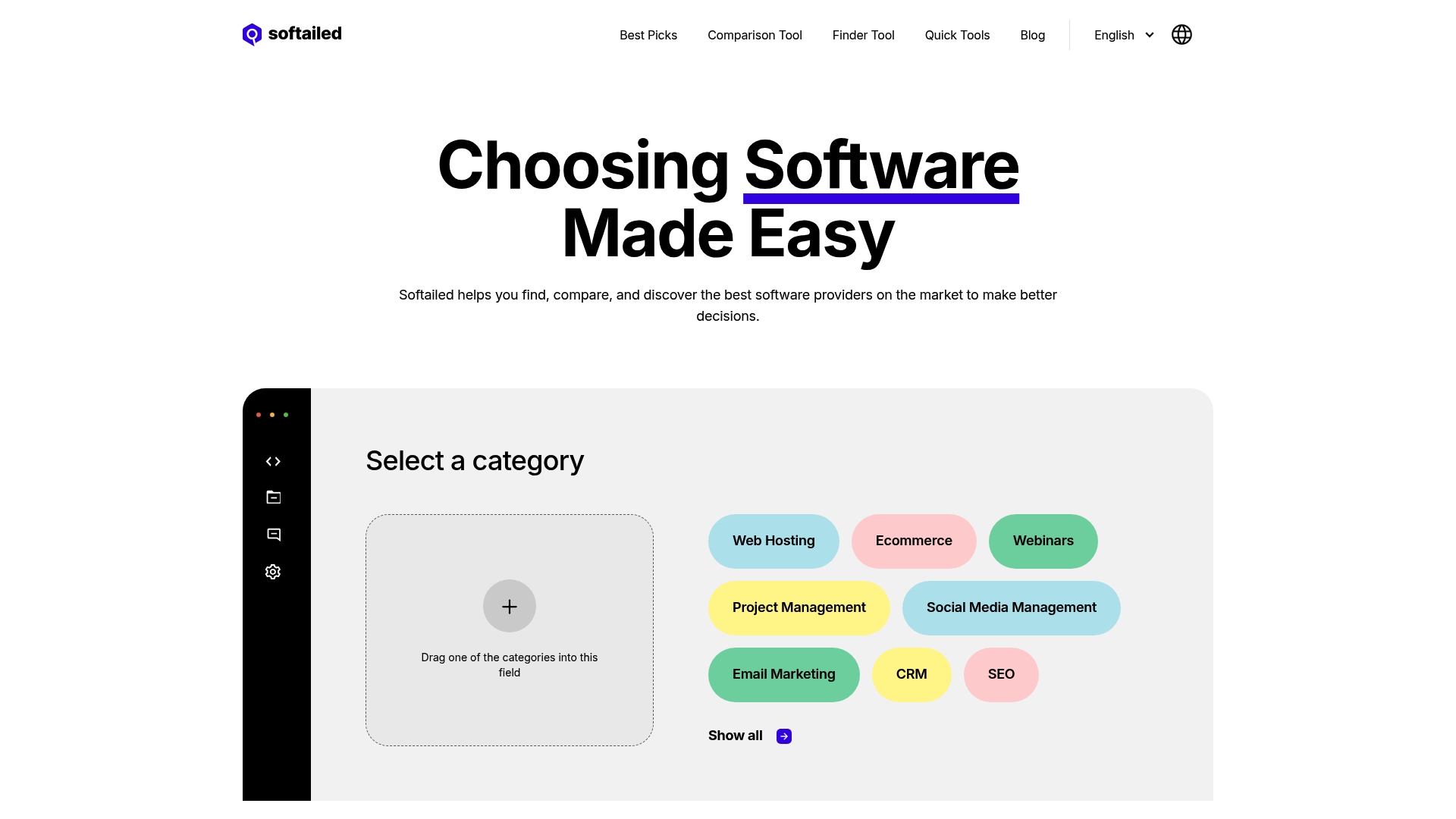
All tools and information are free to use with no registration required. This makes quick comparisons and recommendations accessible to teams that need fast answers without vendor gating. The site targets broad software categories and emphasizes transparent research over user-submitted ratings.
Core Features
Softailed offers a comparison tool for side by side evaluations and a finder tool that suggests options based on simple inputs. The site publishes research based rankings that cover hosting, ecommerce, email marketing, CRM, project management, SEO, and similar categories. Editorial processes aim for transparency by describing criteria and updating listings as markets shift.
Key Differentiator
Softailed focuses on producing expert backed, research led evaluations that prioritize transparency and user needs. That emphasis separates it from sites that rely primarily on user reviews or paid placements. The editorial approach suits decision makers who want a research foundation before running pilots or trials.
Pros
Softailed keeps everything free and removes a registration barrier, which speeds discovery for busy teams. The comparison and finder tools reduce manual spreadsheets by gathering feature lists and ranking signals in one place. Coverage across many mainstream categories makes it easy to compare adjacent tools when you are reworking a stack.
Cons
- No substantive third party user reviews are visible, which limits peer feedback and real-world anecdotes.
- Limited information on proprietary algorithms and scoring methods can leave analysts wanting more transparency about weightings.
- The focus on broad categories may miss deep, niche product details important to very specialized teams.
When It May Not Fit
If you require detailed peer reviews and community-sourced ratings, this site will feel thin on firsthand feedback. Buyers who need audit level transparency about scoring math will need a source that publishes algorithmic details. Niche product searches that demand long tail comparisons may return fewer useful entries.
Who It’s For
Small to large businesses, product teams, and procurement leads who want objective, research backed comparisons before shortlisting tools will get immediate value. Agencies assembling vendor lists will save time by starting with Softailed’s rankings and then validating through trials. Decision makers who prefer editorial analysis over crowdsourced star ratings will find the approach familiar.
Real World Use Case
A digital marketing agency uses Softailed to compare CRM and email marketing tools for a client account. The team runs the comparison tool, narrows to three vendors, and exports the notes into a procurement brief. That workflow cuts hours of manual research and clarifies which products merit demos.
Website: https://softailed.com
Comparison of Software Discovery and Comparison Platforms
Selecting the optimal software discovery platform depends on the features and decision-making support it offers. Below is a comparison of prominent options.
| Product | Key Differentiator | Suitable For | Pricing | Notable Limitation |
|---|---|---|---|---|
| Toolsplorer | AI-powered aggregated rankings with transparent source linking | Product managers and marketing teams | Price not published | Relies on third-party review source accuracy |
| Softwarefinder | Unbiased reviews with vendor profile management and expert advice | Procurement teams wanting direct user feedback | Price not published | Shared leads may reduce exclusivity and lead value |
| SaasTrac | Editorial award-focused discovery model | Marketing teams valuing recognition and social proof | Price not published | Limited depth of user reviews |
| Softailed | Free research-based evaluations with no registration required | Objective, research-backed comparisons | Free | No substantial peer reviews |
How to Choose Between ow.ly and bitly Without Wasting Time
Choosing the right link shortener tools like ow.ly vs bitly can feel complex with many factors to consider. Users want clear, unbiased comparisons backed by real data to avoid making a wrong choice. Toolsplorer addresses these concerns by providing AI-driven scoring that gathers reviews from multiple sources into one trusted ranking. This helps product managers and marketing teams cut through scattered opinions to find the best fit for their needs.
See verified data and linked reviews side by side. Find up-to-date rankings and vendor details all in one place.
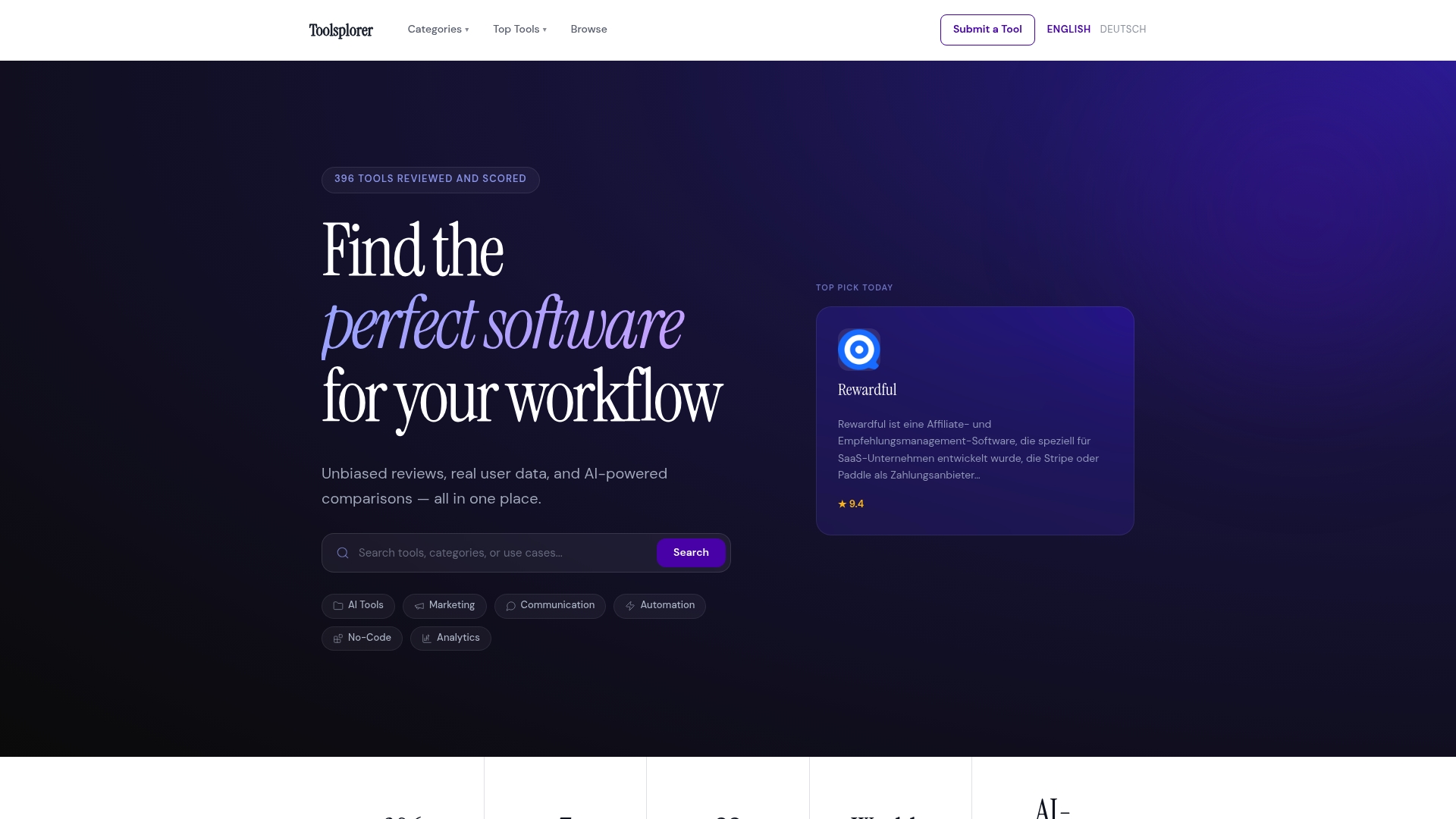
Start comparing link shortener tools at Toolsplorer to save research time and make confident decisions. Filter results, examine rating sources, and build a shortlist tailored for your workflow needs.
FAQ
How does Toolsplorer help with software discovery?
Toolsplorer aggregates unbiased reviews to provide ranked tool lists for software discovery. The site publishes weekly data updates and surfaces real user data alongside rankings, making it a reliable resource for teams looking to compare tools effectively.
What is the difference between Toolsplorer and Bitly?
Bitly specializes in URL shortening and link management, offering features like tracking analytics for shortened links. Toolsplorer, in contrast, provides a broader software discovery and comparison platform that aggregates reviews and highlights top-rated tools in various categories, making it a better fit for teams needing a ranked shortlist for vendor evaluation.
How often does Toolsplorer update its rankings?
Toolsplorer refreshes its rankings weekly to reflect new feedback from independent sources. This regular update ensures that users have access to the most current information to aid in their software decisions.
Can vendors submit tools for review on Toolsplorer?
Yes, vendors can submit their tools for review on Toolsplorer. This feature enhances the platform’s offerings by allowing new entries to be considered for ranking and exposure, benefiting both vendors and users looking for the latest options.
What categories does Toolsplorer cover?
Toolsplorer covers a wide range of categories, including AI tools, marketing, communication, no-code solutions, automation, and analytics. This extensive coverage allows teams to discover tools across different needs and functions.
Does Toolsplorer provide transparency about its ranking sources?
Yes, Toolsplorer publishes the underlying review sources with each ranked tool. This transparency helps users verify opinions and makes informed decisions regarding vendor selection.