

TL;DR:
- A hybrid SQL and NoSQL architecture offers the best balance of transactional reliability and catalog flexibility for most ecommerce operations.
- Tools like MySQL, PostgreSQL, TiDB, and YugabyteDB suit different scale and security needs, while AI-driven platforms help compare real-world performance.
For most ecommerce operations, a hybrid SQL and NoSQL architecture delivers the best balance of transactional reliability and catalog flexibility. Here are the leading options worth evaluating:
- MySQL — reliable, fast, and well-supported for small to mid-sized stores
- PostgreSQL — full ACID compliance with row-level security, ideal for payment-heavy platforms
- TiDB — distributed SQL with native HTAP, built for global scale and flash-sale traffic
- YugabyteDB — fault-tolerant distributed SQL with multiregional deployment support
- evitaDB — purpose-built for ecommerce product search with millisecond-level filtering latency
- MongoDB — flexible document storage for unstructured or rapidly evolving product catalogs
The right pick depends on your traffic volume, data complexity, and integration requirements. Platforms like Toolsplorer aggregate AI-scored reviews across these options so you can compare them against your actual workflow needs rather than vendor marketing.
Table of Contents
- Why SQL, NoSQL, and hybrid databases each matter for ecommerce
- Performance and scalability factors your ecommerce database must handle
- How to choose the right database for your ecommerce business
- How Toolsplorer helps you choose the best ecommerce database software
- How AI-driven review platforms change database selection
- Key Takeaways
- FAQ
Why SQL, NoSQL, and hybrid databases each matter for ecommerce
SQL databases organize data into structured tables with strict schemas and enforce ACID compliance, meaning every transaction either completes fully or rolls back. That property is non-negotiable for order processing, payment records, and inventory updates. PostgreSQL and MySQL are the two most widely deployed SQL options in ecommerce, with PostgreSQL offering an edge through row-level security that restricts data access at the individual record level.
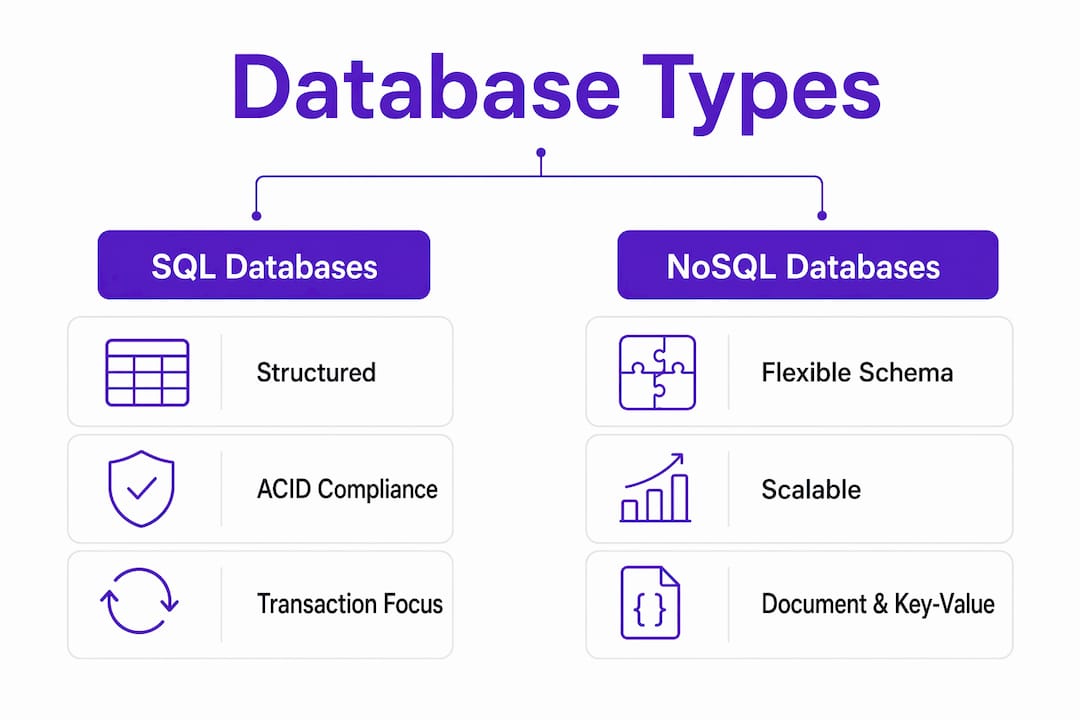
NoSQL databases trade strict schema enforcement for flexibility. MongoDB stores product data as BSON documents, which means you can add new attributes to a product without migrating the entire table. Cassandra and Amazon DynamoDB handle write-heavy workloads at massive scale. For a catalog with thousands of SKUs and constantly shifting attributes, that flexibility is genuinely useful.
Hybrid architectures combine both approaches: SQL handles the transactional layer while NoSQL manages the catalog or analytics layer. The operational catch is synchronization. Tools like Debezium use change data capture to keep both engines consistent, but that adds infrastructure complexity most small stores do not need. Key trade-offs at a glance:
- SQL strengths: structured data, ACID transactions, mature tooling, strong community
- NoSQL strengths: horizontal scaling, schema flexibility, high write throughput
- Hybrid advantage: optimized for both transaction integrity and catalog scale
- Hybrid cost: synchronization overhead, more moving parts, higher engineering lift
Polyglot persistence is worth the complexity only when a single database genuinely cannot meet your requirements. For most stores under significant scale, PostgreSQL alone handles both jobs well.
Performance and scalability factors your ecommerce database must handle
Latency is not a nice metric to track. Millisecond delays in product filtering directly affect conversion rates, and slow checkout flows lose customers before they complete a purchase. Your database architecture needs to account for this from day one.

Caching is the fastest lever available. A Redis caching layer reduces load on your primary database by up to 80% by serving session data, shopping cart state, and frequently accessed product records from memory. That headroom matters most during flash sales or seasonal spikes when query volume can multiply in minutes.
Schema design is the other side of the equation. Proper normalization and indexing on frequently queried columns keep response times stable as your catalog grows from thousands to millions of items. Skipping indexes early is a debt that compounds fast.
Scaling strategy differs by database type:
- Vertical scaling (SQL): add CPU and RAM to a single server; hits a ceiling eventually
- Horizontal scaling (NoSQL/distributed SQL): add nodes to distribute load; TiDB and YugabyteDB both support this natively
- Read replicas: offload reporting and analytics queries from the primary write database
- Connection pooling: tools like PgBouncer prevent connection exhaustion under high concurrency
TiDB’s distributed architecture supports elastic horizontal scaling during peak events without downtime, which is why it appears on shortlists for retailers running global promotions.
How to choose the right database for your ecommerce business
The best database for any ecommerce operation is the one that matches your current scale and can grow with your traffic without forcing a full migration. That sounds obvious, but teams routinely over-engineer for hypothetical scale or under-invest and hit a wall at 50,000 daily users.
Business size is the first filter. MySQL handles small to mid-sized stores with straightforward requirements and has strong compatibility with platforms like Magento and WooCommerce. YugabyteDB and TiDB are better fits for global retailers managing high query volumes across multiple regions.
Integration compatibility matters more than people admit. Shopify runs on MySQL. Magento supports MySQL and MariaDB natively. If your platform has a preferred database, deviating from it adds engineering overhead without obvious benefit unless your scale demands it.
Security requirements for ecommerce are specific. You need end-to-end encryption at rest and in transit, role-based access control, and compliance with PCI DSS for payment data. PostgreSQL’s row-level security gives granular control over who sees which records, which is useful when multiple teams query the same database.
Backup and disaster recovery should be non-negotiable line items in your evaluation. Look for point-in-time recovery, automated daily snapshots, and documented RTO/RPO targets. YugabyteDB includes automatic replication across availability zones, reducing the risk of a single-region outage taking down your store.
Cost models vary significantly. Open-source options like MySQL and PostgreSQL have no licensing fees but carry infrastructure and operational costs. Managed cloud services add a premium but reduce the engineering burden. Evaluate total cost of ownership, not just the sticker price.
How Toolsplorer helps you choose the best ecommerce database software
Picking a database from a vendor’s feature page gives you marketing copy. What you actually need is aggregated feedback from teams who ran that database under real ecommerce conditions. That is the gap Toolsplorer fills.
Toolsplorer’s AI-driven scoring pulls reviews from multiple sources and weights them against feature data, so the score reflects actual user experience rather than a single platform’s rating. The database software archive covers the full range of options from open-source relational databases to distributed SQL platforms, with comparison tools that let you filter by use case, pricing model, and integration support.
- AI-aggregated scores reduce the noise from outlier reviews
- Side-by-side comparisons map database features to ecommerce-specific needs
- Embedded professional recommendations surface options matched to your business size
- Case study references show how similar operations have deployed each database
Pro Tip: Use Toolsplorer’s filtering by ecommerce platform compatibility before you shortlist databases. If your store runs on Shopify or Magento, that single filter eliminates several options immediately and saves hours of research.
The development tools archive on Toolsplorer also covers backend infrastructure that pairs with your database layer, including ORM frameworks and query optimization tools.
How AI-driven review platforms change database selection
Traditional software selection relied on analyst reports, vendor demos, and peer recommendations. The problem with that process is that it is slow, often biased toward large vendors with marketing budgets, and rarely surfaces how a tool performs at your specific scale.
AI-driven review platforms aggregate signals from hundreds or thousands of real deployments and score tools against criteria that matter to the searcher’s context. For database selection, that means scores weighted toward latency benchmarks, uptime records, and integration breadth rather than generic feature counts. The result is a shortlist grounded in data rather than brand recognition.
Toolsplorer’s AI scoring applies this model across software categories, including databases, so ecommerce teams can compare options with confidence that the rankings reflect real-world performance. That matters most when the decision carries significant infrastructure cost and switching later is expensive.
Key Takeaways
For ecommerce teams, the database decision shapes performance, cost, and scalability for years, making it one of the highest-stakes infrastructure choices you will make.
| Point | Details |
|---|---|
| Hybrid architecture wins at scale | SQL handles transactions; NoSQL manages catalogs; combining both covers most ecommerce needs. |
| Caching cuts database load by up to 80% | Redis or similar layers serve session and product data from memory during peak traffic. |
| Schema design compounds over time | Proper normalization and indexing prevent query slowdowns as catalogs grow to millions of items. |
| Match database to business size | MySQL fits small stores; TiDB and YugabyteDB serve global retailers needing distributed SQL. |
| AI-scored comparisons reduce selection risk | Toolsplorer aggregates multi-source reviews to match database options to your specific workflow. |
FAQ
What is the best database for a small ecommerce store?
MySQL is the most practical starting point for small to mid-sized stores. It is fast, well-documented, and natively compatible with platforms like Magento and WooCommerce.
When should an ecommerce site switch to a distributed database?
When a single-server SQL database can no longer handle traffic spikes without degraded performance, distributed options like TiDB or YugabyteDB provide horizontal scaling without downtime.
Do ecommerce databases need both SQL and NoSQL?
Not always. PostgreSQL handles both structured transactions and flexible JSON data well enough for most stores. A hybrid setup makes sense only when catalog complexity or analytics requirements exceed what a single engine can manage efficiently.
How does caching improve ecommerce database performance?
A Redis caching layer stores frequently accessed data in memory, reducing load on the primary database by up to 80% and keeping response times stable during high-traffic periods.
How does Toolsplorer help with database software selection?
Toolsplorer aggregates AI-scored reviews from multiple sources and maps database features to ecommerce-specific criteria, giving teams a data-backed shortlist instead of relying on vendor marketing alone.