

Start your evaluation at Toolsplorer, where an AI-driven scoring rubric and curated review dossiers cut vendor shortlisting from weeks to hours. For apparel teams, the non-negotiables are PLM support, SKU matrix handling across style, color, size, and prepack dimensions, native EDI and ecommerce connectors, and a vendor with real garment implementation experience. The four specialized platforms worth evaluating first: ApparelMagic for small to mid-sized brands, AIMS360 for mid-market wholesalers needing broad integrations, Aptean Fashion & Apparel for AI-first enterprise buyers, and Uphance for growing brands consolidating fragmented tools.
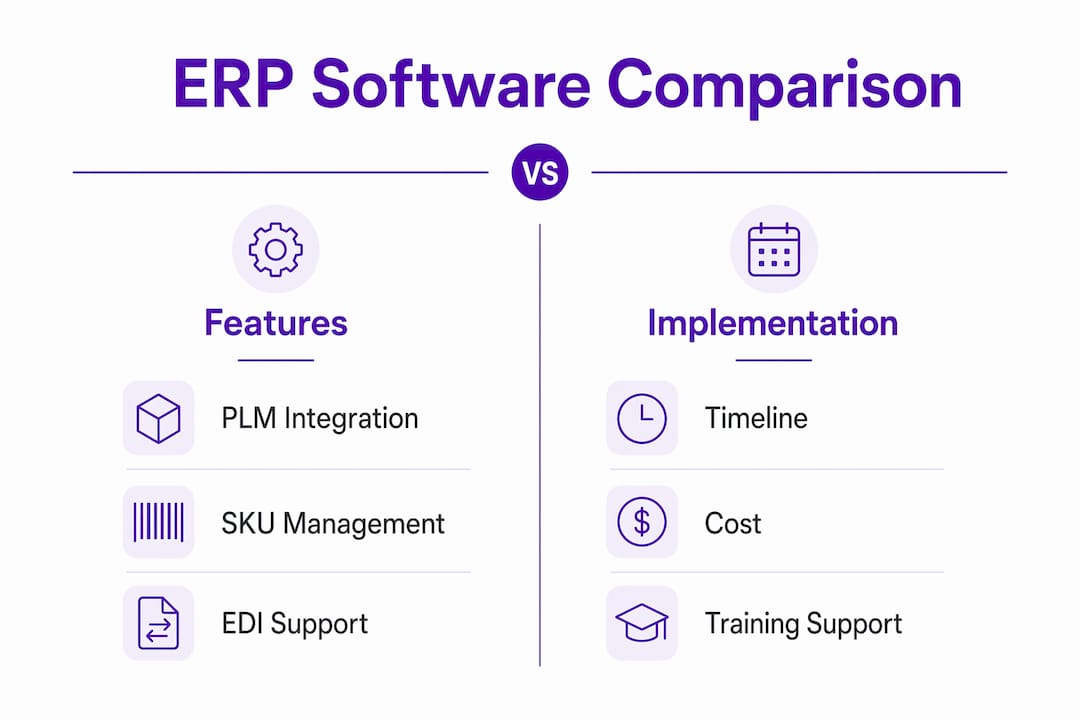
Three signals to test in every vendor demo: Can the system demonstrate a live SKU matrix workflow? Does PLM and EDI connect natively, or through a third-party bolt-on? Can the vendor show documented ROI timelines from apparel clients at your company size?
| Platform | Best For | Core Strength |
|---|---|---|
| Toolsplorer | Buyers wanting unbiased shortlists | AI scoring, review dossiers, vendor comparison |
| ApparelMagic | Small to mid-sized fashion brands | Integrated PLM/ERP for SKU matrices |
| AIMS360 | Mid-market brands and wholesalers | Broad integrations, hands-on implementation |
| Aptean Fashion & Apparel | Mid to enterprise, AI-first buyers | AppCentral platform, native PLM/EDI/AI |
| Uphance | Growing brands replacing spreadsheets | Unified ops: product, inventory, orders, accounting |
- PLM and EDI integration should be native, not patched in via middleware
- Vendor must show apparel-specific case studies, not generic manufacturing references
- Check Capterra and G2 for corroborating customer feedback before signing
Table of Contents
- How does ERP software for garments compare across key apparel dimensions?
- How Toolsplorer scored and selected these apparel ERP options
- What questions should you ask vendors before choosing?
- What does apparel ERP implementation actually cost and how long does it take?
- What support and training do garment ERP vendors provide?
- What security and compliance standards matter for garment ERP?
- How easy is apparel ERP software to use for production teams?
- What do real garment ERP implementations look like?
- Toolsplorer makes your apparel ERP shortlist faster and sharper
- FAQ
- Key Takeaways
How does ERP software for garments compare across key apparel dimensions?
| Dimension | Toolsplorer | ApparelMagic | AIMS360 | Aptean Fashion & Apparel | Uphance |
|---|---|---|---|---|---|
| Target size | All sizes | SMB | Mid-market | Mid to enterprise | SMB to mid |
| Core modules | Comparison tool | PLM, inventory, CRM, orders | Production, inventory, orders, EDI | PLM, SFC, EDI, allocation, BI | Product, inventory, orders, accounting |
| Deployment | Cloud | Cloud | Cloud | Cloud-native (Azure) | Cloud |
| Integration readiness | Aggregates vendor data | Native PLM, EDI connectors | Broad ecosystem (EDI, ecommerce, 3PL, WMS) | Native PLM, EDI, SFC, AppCentral | Core integrations |
| Pricing model | Free to use | Subscription | Subscription + implementation fees | License + implementation | Subscription |
| Implementation services | Vendor-neutral guidance | Vendor-led | Hands-on, apparel-expert team | Apparel specialists embedded | Self-guided + support |
| AI / real-time visibility | Scoring aggregation | Limited | Limited | AI-powered AppCentral, GenAI Query | Limited |
| U.S. support & compliance | U.S.-based editorial | U.S. market | U.S. market | SOC 2, Azure security, 24/7 support | U.S. market |
Three red flags to test:
- Vendor cannot demonstrate a live style/color/size matrix in the demo environment
- PLM or EDI requires a separate third-party connector with its own licensing
- ROI claims lack apparel-specific client references at your company size
Three trust signals to confirm:
- Vendor provides a structured discovery phase before scoping implementation
- Third-party reviews on Capterra or G2 reference apparel or fashion use cases specifically
- Security documentation covers data encryption, access controls, and uptime SLAs
How Toolsplorer scored and selected these apparel ERP options
Toolsplorer scored vendors using a weighted rubric that prioritizes SKU-matrix fidelity, native PLM/EDI integration, and vendor-provided apparel implementation expertise.

| Scoring Dimension | Weight | Primary Sources |
|---|---|---|
| SKU & PLM support | — | 4 vendor docs |
| Integration readiness | — | 3 vendor docs |
| Implementation services & apparel expertise | — | 3 vendor docs |
| Scalability & channel support | — | 2 vendor docs |
| AI / real-time visibility features | — | 2 vendor docs |
| Pricing transparency & ROI signals | — | 2 vendor docs |
| U.S. support & security | 5% | 2 vendor docs |
Data sources included vendor product pages, vendor-provided case studies, and third-party review aggregators including Capterra and G2. Detailed negotiated pricing was not scored, since those figures vary by contract.
- Confirm SKU matrix handling covers style, color, size, and prepack in a single unified view
- Verify PLM and EDI are native integrations, not third-party add-ons
- Request apparel-specific case studies from clients at your revenue tier
- Ask for a documented discovery-phase process before implementation scoping
- Cross-reference vendor claims against Capterra or G2 reviews from fashion brands
Pro Tip: Ask every vendor to run a live demo using your actual SKU structure, not a canned sample dataset. Generic demos hide the gaps that surface during real implementation.
What questions should you ask vendors before choosing?
Garment ERP selection fails most often when buyers treat it as a feature checklist rather than an operations design decision. The right questions expose whether a vendor actually understands apparel complexity.
Ask vendors: How does your system handle a single style with 48 SKU variants across four colors and three size runs? What happens when a style becomes unavailable mid-season? Can you show me pre-season booking and in-season replenishment in the same interface? Aptean’s style substitution capability, for example, identifies comparable alternatives by attributes and availability automatically, keeping orders moving without manual matching.
Also ask about data migration. Bring your messiest SKU data to the demo and watch how the vendor handles it. A vendor who hedges on data cleanup is signaling that the burden falls entirely on your team.
What does apparel ERP implementation actually cost and how long does it take?
Implementation timelines for clothing manufacturing ERP vary significantly by company size and data readiness. Vendors typically begin with a discovery phase to map SKU logic, seasonal processes, and channel rules before scoping the project. Skipping that phase is the single fastest way to blow a timeline.
For SMBs using platforms like ApparelMagic or Uphance, go-live in 60–90 days is realistic when product data is clean. Mid-market implementations with AIMS360 or Aptean typically run 3–6 months, factoring in EDI trading partner setup, warehouse integration, and team training. Aptean notes that ROI timelines depend heavily on prior data structure and training investment, not just software capability.
Pricing structures vary: subscription models dominate cloud-native platforms, while enterprise deployments often carry separate implementation fees. Get a fully loaded cost estimate that includes data migration, training, and first-year support before comparing sticker prices.
What support and training do garment ERP vendors provide?
Support quality separates good apparel ERP vendors from great ones. AIMS360 embeds apparel industry experts directly into its implementation process, mapping software to brand-specific workflows before go-live. Aptean provides hands-on training, detailed documentation, and 24/7 professional support backed by Microsoft Azure infrastructure.
For smaller brands, Uphance and ApparelMagic offer self-guided onboarding with support teams available for questions. The key distinction: vendor-embedded apparel expertise means your implementation team already understands seasonal assortment logic, not just software configuration. Ask specifically whether your assigned implementation contact has worked with apparel brands, not just manufacturing clients generally.
What security and compliance standards matter for garment ERP?
Any cloud-based fashion business ERP handling customer data, financial records, and EDI transactions needs enterprise-grade security. Aptean Fashion & Apparel runs on Microsoft Azure with proactive monitoring, penetration testing, and 24/7 support coverage. SOC 2 compliance is the baseline standard to request from any vendor handling sensitive order and financial data.
For U.S. apparel brands, also confirm: data residency (where your data is stored), role-based access controls to limit who can view pricing and margin data, and encryption standards for EDI transmissions. These are not negotiable items to defer until post-contract.
How easy is apparel ERP software to use for production teams?
Ease of use for apparel teams means something specific: can a merchandiser enter a seasonal booking without IT help? Can a warehouse team member look up inventory by style and color without navigating five menus? Aptean’s GenAI Query feature lets team members ask plain-language questions about sell-through or open purchase orders and get instant answers, which is a genuine usability advantage for non-technical users.
Uphance focuses on replacing spreadsheets with a single operational core, which matters most for teams still running product development and order management in disconnected tools. ApparelMagic’s interface is built around fashion SKU logic, so the learning curve for apparel-native workflows is lower than adapting a generic ERP.
What do real garment ERP implementations look like?
Vendor case studies and third-party reviews on Capterra and G2 are the most reliable signals of real-world implementation quality. Look specifically for reviews that mention SKU complexity, seasonal planning, or EDI setup, not just general satisfaction scores.
The most common failure pattern: buying a capable ERP but continuing to maintain disconnected spreadsheets alongside it, which defeats the purpose of a centralized single source of truth. Brands that see the fastest ROI typically enter implementation with clean, structured product data and a dedicated internal project owner who can make decisions about workflow mapping without escalation.
Toolsplorer makes your apparel ERP shortlist faster and sharper
Sorting through vendor marketing for garment inventory management software takes time most ops and procurement teams don’t have. Toolsplorer gives you a faster path: AI-driven scoring that weights the dimensions that actually matter for apparel (SKU fidelity, PLM/EDI integration, implementation expertise), plus full review dossiers so you can compare vendors side by side without starting from scratch.
You can browse the full software comparison library to filter by category, read detailed vendor dossiers, and build a shortlist matched to your company size and workflow priorities. For teams evaluating AI features specifically, the AI tools category covers the GenAI and automation capabilities that increasingly separate modern apparel ERPs from legacy systems. Start your comparison at Toolsplorer and go into vendor demos with a sharper set of questions.
FAQ
What is the best ERP software for garments?
The best fit depends on company size and priorities. ApparelMagic suits small to mid-sized brands; AIMS360 fits mid-market wholesalers; Aptean Fashion & Apparel targets mid to enterprise buyers needing AI and native PLM/EDI. Use Toolsplorer’s scored shortlist to match vendors to your specific workflow.
What modules does a garment ERP need?
At minimum: PLM, SKU matrix management (style/color/size/prepack), inventory, order management, and EDI. Native integration between these modules matters more than having them as separate bolt-ons.
How long does apparel ERP implementation take?
SMB implementations typically run a few months with clean data; mid-market and enterprise projects often take several months. Timeline depends heavily on data readiness and team training investment, not just software complexity.
Does garment ERP software support EDI?
Yes, leading platforms like AIMS360 and Aptean Fashion & Apparel include native EDI for trading partner transactions. Always confirm whether EDI is native or requires a third-party connector with separate licensing.
How do I verify vendor claims about apparel ERP ROI?
Request apparel-specific case studies from clients at your revenue tier, then cross-reference on Capterra or G2. ROI timelines are realistic only when buyers already have structured product data and a clear internal project owner.
Key Takeaways
Garment ERP selection is an operations design decision: SKU-matrix fidelity, native PLM/EDI integration, and vendor apparel expertise matter more than feature count alone.
| Point | Details |
|---|---|
| SKU matrix is the baseline test | Any ERP that can’t handle style/color/size/prepack natively will create parallel spreadsheet workarounds. |
| Native PLM and EDI beat bolt-ons | Bolted-on integrations add reconciliation overhead and slow seasonal decision-making. |
| Data readiness drives ROI timing | Vendors report faster ROI when buyers enter with clean, structured product data and a dedicated project owner. |
| Discovery phase is mandatory | Map SKU logic, seasonal processes, and channel rules before any vendor scopes implementation. |
| Toolsplorer shortlists by fit | Toolsplorer’s AI scoring weights apparel-specific dimensions so buyers compare vendors on substance, not marketing claims. |