

The best PopTox alternatives are BubblyPhone, Google Voice, WhatsApp, FreJun, and RingCentral, each offering more reliable calls, clearer pricing, and better features than PopTox’s ad-funded free service. PopTox limits free calls to between 1 and 15 minutes per day, with inconsistent quality, particularly for calls to India and Pakistan. The options below cover every use case: browser-based dialing to real phone numbers, app-to-app calling, and full business phone systems.
| Tool | Best For | Free Tier | Platforms | Business Features | Call Quality |
|---|---|---|---|---|---|
| BubblyPhone | Browser-based calls to real numbers | 30 min/day, no sign-up | Browser | Basic | HD, consistent |
| Google Voice | US/Canada calling, Google users | Free US/Canada | Web, iOS, Android | Voicemail, forwarding | Good |
| App-to-app calls worldwide | Unlimited (app-to-app) | iOS, Android, Web | Limited | Excellent (app-to-app) | |
| TextNow | Free North American calling | Ad-supported | iOS, Android | Limited | Moderate |
| FreJun | Business VoIP with CRM | Trial available | Web, iOS, Android | CRM, analytics | High |
| RingCentral | Enterprise communication | Limited trial | Web, iOS, Android, Desktop | Full suite | Enterprise-grade |
| Nextiva | SMB unified communication | Trial | Web, iOS, Android | Automation, analytics | High |
| Grasshopper | Small business phone presence | Trial | iOS, Android, Web | Extensions, voicemail | Good |
| Vonage | Custom call workflows | Trial | Web, iOS, Android | API, IVR, CRM | High |
| Dialpad | AI-powered business calling | Free tier (limited) | Web, iOS, Android, Desktop | AI transcription, sentiment | High |
| Ooma Office | Simple SMB VoIP | Trial | Web, iOS, Android | Call handling | Good |
| 8×8 | International enterprise calling | Trial | Web, iOS, Android, Desktop | Unlimited 40+ countries | High |
| Zoom Phone | Teams using Zoom | Trial | Web, iOS, Android, Desktop | Video+voice integration | High |
| Aircall | Sales and support teams | Trial | Web, iOS, Android | CRM, monitoring | High |
| Twilio | Developer custom workflows | Pay-as-you-go | API/Web | Fully programmable | High |
| Skype | General-purpose calling | Free app-to-app | Web, iOS, Android, Desktop | Basic | Good |
| Viber Out | Affordable international calls | Free app-to-app | iOS, Android | Basic | Good |
| BoraPhone | Stable essential calls | Limited free | Browser | Basic | Reliable |
| Globfone | Occasional short calls | Free (limited) | Browser | None | Inconsistent |
| Calilio | Cloud PBX for business | Trial | Web, iOS, Android | Full PBX | High |
| Ring4 | Mobile-first global calling | Trial | iOS, Android | Basic business | Good |
| Alohaa | Integrated team communication | Trial | Web, iOS, Android | Unified comms | Good |
| Voxloud | Business call management | Trial | Web, iOS, Android | CRM, call center | High |
| iTeleCenter | Virtual toll-free numbers | Trial | Web, iOS, Android | Virtual numbers | Good |
| Tragofone | Secure enterprise mobile VoIP | Trial | iOS, Android | Compliance, security | High |
| FluentStream | Growing business softphone | Trial | Web, iOS, Android | Cloud PBX | High |
| GoTo Connect | Enterprise UCaaS | Trial | Web, iOS, Android, Desktop | Full UCaaS | High |
| Continent Telecom IP PBX | Advanced IP telephony | — | Web, Desktop | IP PBX, multi-channel | High |
| Yodel | Simple cloud calling | Trial | Web, iOS, Android | CRM integration | Good |
| Dialpad Talk | Sales and support AI | Free tier (limited) | Web, iOS, Android | AI coaching | High |
| Fuze | Global enterprise comms | Trial | Web, iOS, Android, Desktop | Enterprise UCaaS | High |
| Dialoft AI | AI calling automation | Trial | Web, iOS, Android | AI analytics | High |
| Fonimo VoIP Softphone | Mobile business calling | Trial | iOS, Android | Customizable | Good |
| Talkroute | SMB call routing | Trial | Web, iOS, Android | Forwarding, transcription | Good |
| TR Cloud VoIP | Cost-effective business VoIP | Trial | Web, iOS, Android | Scalable PBX | Good |
| MightyCall | Small team phone presence | Trial | Web, iOS, Android | Online management | Good |
| CommPeak | Call center outbound/inbound | Trial | Web, iOS, Android | High-capacity, analytics | High |
| FiberDial | Enterprise-level cloud VoIP | Trial | Web, iOS, Android | Reporting, integrations | High |
| Toolsplorer | Finding the right VoIP tool | Free | Web | AI-driven comparison | N/A |
Table of Contents
- What are the best PopTox alternatives for your needs?
- How to choose the right PopTox substitute
- Why PopTox falls short and why alternatives matter
- What telecom analysts say about free VoIP services
- Key Takeaways
- The real problem with “free” calling in 2026
- Toolsplorer makes finding the right VoIP tool faster
- FAQ
What are the best PopTox alternatives for your needs?
The right choice depends almost entirely on one question: do you need to call a real phone number, or is the other person also using an app?
App-to-app services like WhatsApp are free and unlimited, with end-to-end encryption, but both parties need the same app installed. That’s a hard limit if you’re trying to reach a landline or a mobile number where the recipient has nothing installed. WhatsApp’s over 2 billion users make it the obvious pick when that condition is met, and call quality within the app is genuinely excellent.
BubblyPhone: the closest true PopTox replacement
For browser-to-real-number calling, BubblyPhone is the strongest direct substitute. It offers 30 free minutes daily with no sign-up, per-second billing, published international rates, and consistent HD quality across more than 200 countries. No app download, no account creation. That combination is rare among free services.

Google Voice handles US and Canada calls for free and works well inside the Google ecosystem, but it requires a Google account and doesn’t cover international destinations at no cost. TextNow gives you a US or Canadian number with ad-supported free calling, though the ads and geographic limits make it a poor fit for international use.
Business-grade options worth knowing
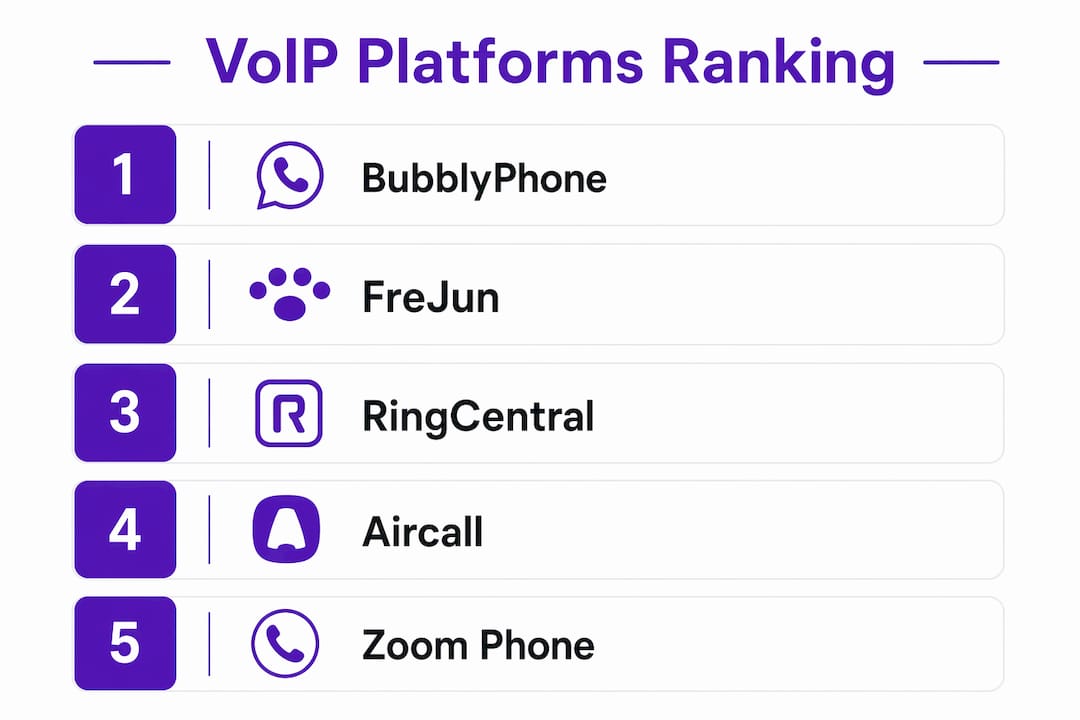
For teams and companies, the gap between free tools and paid platforms is wide; exploring Local Hosted Phone Service for Business, Schools and Government can help you find solutions that match your communication needs. Business VoIP services like RingCentral, Nextiva, and Dialpad include CRM integration, call analytics, and dedicated support that free tools simply don’t offer. RingCentral integrates with Microsoft Teams and Salesforce, making it a natural fit for enterprises already running those platforms. Nextiva suits small to medium businesses that want calling, email, and chat in one place without a steep learning curve.
FreJun stands out for sales-focused teams. Its AI-powered platform connects directly with Salesforce and HubSpot, and real-time analytics make it easy to track call outcomes without manual logging. Dialpad takes a similar AI-first approach, adding voice transcription and sentiment analysis to every call.

Aircall, Vonage, and 8×8 each serve specific niches. Aircall is built for customer service and sales teams that need live call monitoring and CRM hooks. Vonage’s API layer lets developers build custom call workflows. 8×8 covers unlimited calling to 40+ countries, which matters for teams with heavy international volume.
Zoom Phone makes the most sense if your team already lives in Zoom for video. The voice and video integration is tight, and scaling up or down is straightforward. GoTo Connect and Fuze serve similar enterprise UCaaS needs, combining voice, video, and messaging in one platform.
For mobile-first users, Ring4 and Fonimo VoIP Softphone both deliver solid VoIP without hardware. Tragofone adds compliance and security features suited to regulated industries. Talkroute, MightyCall, and Grasshopper all target small businesses that want a professional phone presence without a complex setup.
CommPeak and FiberDial sit at the high-capacity end, with CommPeak built specifically for call centers needing outbound and inbound automation. Calilio, FluentStream, Alohaa, Voxloud, iTeleCenter, Yodel, Dialpad Talk, Dialoft AI, TR Cloud VoIP, and Continent Telecom IP PBX round out the list for businesses with specific PBX, cloud, or AI-automation requirements.
Skype and Viber Out remain viable for occasional international calls at low per-minute rates. BoraPhone offers browser-based calling with a reliability focus. Globfone is free but plagued by quality and availability issues, making it a last resort rather than a recommendation.
Pro Tip: Before committing to any paid plan, use the free tier or trial to make at least five calls to your most common destinations. Call quality varies by route, and a plan that works perfectly for US-to-UK calls may drop frequently on US-to-South Asia routes.
How to choose the right PopTox substitute
Start with your actual use case, not the feature list. Most users searching for a PopTox alternative want one specific thing: a browser-based dialer that calls real phone numbers without requiring the recipient to install anything. Many users mistakenly switch to app-only services that can’t fulfill that need at all.
Key factors to evaluate:
- Call destination: Does the service cover the countries you call most? Check published rate tables, not just “200+ countries” marketing claims.
- Free tier limits: Free minutes are almost always capped. BubblyPhone’s 30 daily minutes is one of the more generous limits among browser-based options.
- Platform compatibility: Browser-only tools work on any device but may lack mobile apps. App-based tools need installation on both ends for free calling.
- Business features: If you’re using VoIP for work, call encryption, CRM integration, and customer support are not optional extras. Free platforms rarely include any of them.
- Pricing transparency: Per-second billing (BubblyPhone) is fairer than per-minute rounding. Subscription plans from RingCentral, Nextiva, or Ooma Office give predictable monthly costs.
- Security: End-to-end encryption matters for business calls. WhatsApp provides it for app-to-app calls; most free browser dialers do not.
For business users, also check whether the service integrates with your existing CRM platforms and whether dedicated phone support is available. A dropped call during a sales call or a support interaction has a real cost that free services don’t account for.
Pro Tip: For international business calls, test during the recipient’s local business hours, not just your own. VoIP route quality can vary significantly by time of day and destination network load.
Why PopTox falls short and why alternatives matter
PopTox’s core problem is structural, not accidental. Free international calling is inherently unstable because voice termination fees are unavoidable. Every call to a real phone number costs the provider money, and an ad-funded model can’t reliably cover those costs at scale.
The practical result for PopTox users:
- Free call limits that shift unpredictably, ranging from 1 to 15 minutes per day
- Inconsistent call quality, with particular reliability problems for calls to India and Pakistan
- No clear pricing for paid calls, making cost planning difficult
- Ad interruptions that degrade the calling experience
- No encryption or security features
- No customer support when calls fail
Free browser-based calling sites are especially vulnerable to these pressures. Ad revenue fluctuates, termination costs rise, and services either restrict usage sharply or shut down without warning. PopTox has followed this pattern, becoming progressively less reliable as its business model has come under pressure.
The deeper issue is that truly free calling to real phone numbers doesn’t exist in a sustainable form. Every service that offers it either limits minutes heavily, monetizes through ads, or charges per minute once the free allowance runs out. Understanding that trade-off helps set realistic expectations before choosing any alternative.
What telecom analysts say about free VoIP services
The fragile business model of free international calling websites is well-documented in telecom analysis. Ad-revenue dependency creates a direct conflict between user experience and revenue generation: more ads mean more revenue but worse calls. As VoIP termination costs have risen, the services that relied purely on ad funding have either restricted service or disappeared.
The more useful framework for choosing a service is matching the calling type to the tool. App-to-app calling (WhatsApp, Skype, Viber Out) is genuinely free and unlimited within the platform but requires both parties to use the same app. Browser-to-phone calling requires the provider to pay termination fees, which means some cost always gets passed to the user, either through ads, minute caps, or per-minute charges.
Businesses face a sharper version of this trade-off. Free VoIP platforms lack encryption, CRM integration, and support, creating hidden costs through lost productivity and poor customer interactions. A dropped call during a client conversation or a support ticket that can’t be tracked costs more than a monthly subscription to a paid service.
The communication tools that hold up over time combine a reasonable free tier with transparent paid options, so users can start without commitment and scale when the need arises.
Key Takeaways
The most reliable PopTox alternatives combine browser-based accessibility, transparent per-minute pricing, and a meaningful free tier, with paid business platforms offering CRM integration and security for professional use.
| Point | Details |
|---|---|
| BubblyPhone leads for browser calling | Offers 30 free daily minutes, no sign-up, per-second billing, and HD quality to 200+ countries. |
| App-to-app vs. browser-to-phone | WhatsApp is free and unlimited but requires both users on the app; browser dialers call real numbers directly. |
| Free tiers always have limits | No free service offers truly unlimited calls to real phone numbers; ad models and termination fees make that impossible. |
| Business users need paid platforms | RingCentral, FreJun, and Dialpad provide CRM integration, encryption, and support that free tools lack. |
| Toolsplorer helps you compare | Toolsplorer’s AI-driven scoring aggregates reviews and features to help you pick the right VoIP tool for your workflow. |
The real problem with “free” calling in 2026
The VoIP market in 2026 has made one thing clear: the search for a completely free, fully reliable browser-based dialer is mostly a dead end. The services that survive long-term either charge a small per-minute fee or build a sustainable business model around paid tiers. BubblyPhone offers a daily allowance of 30 free minutes with per-second billing after that, representing an honest model. PopTox’s unpredictable limits and ad dependency do not provide a reliable service.
What frustrates users most isn’t the cost. It’s the opacity. A service that charges $0.02 per minute with published rates is far less annoying than one that claims to be free but drops calls after eight minutes with no explanation. Transparency about what you’re getting, and what it costs when the free minutes run out, is the single most underrated feature in this category.
For business users, the calculus is even simpler. Free web-calling platforms lack the encryption, CRM hooks, and support that professional communication requires. The hidden cost of a dropped client call or an untracked support interaction adds up fast. Paid platforms like RingCentral, Nextiva, or Aircall aren’t expensive relative to what a single lost deal costs.
The one piece of advice worth repeating: test before you commit. Call quality varies by route, by time of day, and by destination network. A five-minute test call to your most common destination tells you more than any feature comparison table.
Toolsplorer makes finding the right VoIP tool faster
Sorting through 39 VoIP options manually takes hours. Toolsplorer cuts that down by aggregating user reviews, feature lists, and current pricing data across hundreds of communication and productivity tools, then scoring them with an AI-driven system so you see which options actually perform for your specific use case.
Whether you’re a solo user who needs a reliable browser dialer or a business team evaluating FreJun, RingCentral, or Dialpad, Toolsplorer gives you the comparison data without the vendor spin. You get unbiased scores, side-by-side feature breakdowns, and real user feedback in one place. Check out the full VoIP and communication tool reviews at Toolsplorer to find the right fit for your workflow today.
FAQ
Is PopTox still working in 2026?
PopTox still operates but has become increasingly unreliable, with free call limits that often vary daily and frequent quality issues for calls to regions like India and Pakistan.
Which free calling app is the best?
For app-to-app calls, WhatsApp offers the best combination of call quality and reach. For browser-based calls to real phone numbers without any app, BubblyPhone’s 30 daily free minutes and per-second billing make it the strongest free option.
How much does PopTox cost?
PopTox’s free tier is ad-supported with unpredictable minute limits. Paid rates are not publicly listed in a transparent format, which is one of the main reasons users look for alternatives with clearer pricing.
What should I use instead of Skype?
For personal calls, WhatsApp or Google Voice cover most needs. For business use, Zoom Phone integrates voice with video if your team already uses Zoom, while RingCentral and Dialpad offer more complete business phone systems with AI features and CRM integration. You can compare all options at Toolsplorer’s communication tools directory.